
If you have been searching for alternatives to medication for anxiety in Los Angeles, you are far from alone. Every year, more people across the city are asking themselves the same question: is there a way to manage my anxiety that does not depend on a daily prescription?
The answer is yes. And this Mental Health Awareness Month, that conversation feels more urgent than ever.
May 2026 marks another Mental Health Awareness Month, and this year’s theme from Mental Health America could not be more fitting: “More Good Days, Together.” For the growing number of Angelenos turning to neurofeedback therapy, that phrase is not just a tagline. It is the whole point.
At Los Angeles Neurofeedback Center in Brentwood, we see it every week. People walk through our doors tired of side effects, tired of feeling numb, and ready to try something different. They want their brains to work better on their own terms, without depending on a pill to feel okay.
This post is for you if that sounds familiar. We are going to walk through why so many people are moving away from anxiety medication, what neurofeedback actually does, and how it might be the path forward you have been looking for.
Mental Health Awareness Month 2026 Hits Different in Los Angeles
Mental Health Awareness Month has been observed every May since 1949. But in 2026, it carries a weight that earlier generations could not have imagined. Anxiety disorders now affect roughly 40 million adults in the United States, according to the National Institute of Mental Health. In Los Angeles specifically, the combination of high-pressure careers, traffic, cost of living, and social comparison culture has created a perfect storm for chronic stress and anxiety.
The theme this year speaks to something simple but powerful: nobody should have to get through it alone. And for many people, “getting through it” has meant relying on prescriptions that were only supposed to be temporary.
SSRIs like Lexapro and Zoloft remain the most commonly prescribed medications for anxiety. Benzodiazepines like Xanax and Ativan are still widely used for acute episodes. These medications help millions of people, and there is absolutely no shame in taking them. But they are not the only option, and a growing number of LA residents are realizing that alternatives to medication for anxiety are not just available. They are effective.
Why So Many People Are Looking for Alternatives to Anxiety Medication
If you have taken anxiety medication, you probably know the trade-offs firsthand. The side effects are real, and for many people, they create problems that feel almost as heavy as the anxiety itself.
Common Side Effects That Push People to Explore Other Options
Weight gain. Sexual dysfunction. Emotional blunting, where you stop feeling the lows but you also stop feeling the highs. Fatigue that makes it hard to get through the afternoon. Brain fog that interferes with your work. Withdrawal symptoms when you miss a dose or try to taper off.
These are not rare complaints. They show up in clinical research, and they show up in conversations we have with clients at our Brentwood office every single day.
The neurofeedback market has grown to $1.45 billion globally in 2025 and is projected to nearly double by 2035. That growth is not happening by accident. It reflects a real shift in how people think about mental health treatment, especially in cities like Los Angeles where wellness culture and evidence-based care intersect.
The Bigger Picture: A Cultural Shift in How We Treat Anxiety
This is not an anti-medication movement. It is a pro-options movement. People are not rejecting psychiatry. They are asking their providers for a fuller picture of what is available to them. They want to understand their brains, not just quiet their symptoms.
That is exactly where neurofeedback comes in.
What Is Neurofeedback and How Does It Work for Anxiety?
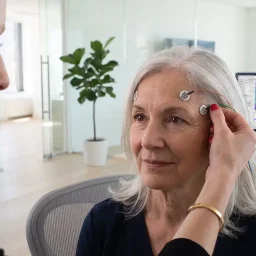
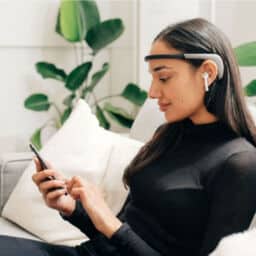
Neurofeedback is a form of brain training that uses real-time monitoring of your brainwave activity to help your brain learn to regulate itself more effectively. It is sometimes called EEG biofeedback because it works by reading your brain’s electrical patterns through sensors placed on your scalp. You do not feel anything. There is nothing invasive about it. And you are in control the whole time. If you are exploring alternatives to medication for anxiety in Los Angeles, understanding how this works is the first step.
Here Is What Happens During a Session
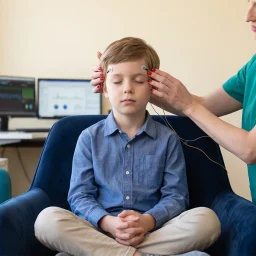
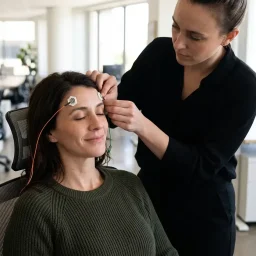
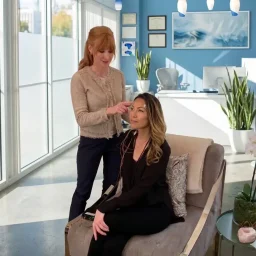
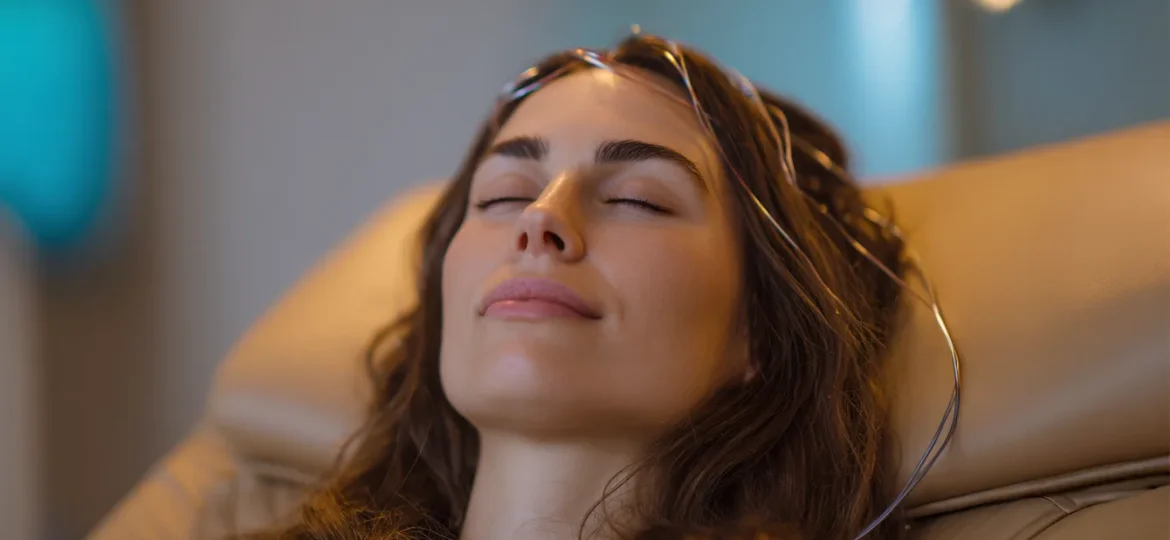
You sit in a comfortable chair. Small sensors are placed on your head. You watch a screen, listen to audio, or engage with a simple visual display. When your brain produces patterns associated with calm, focused states, the feedback reinforces those patterns. When your brain drifts toward anxious, overactive patterns, the feedback gently redirects.
Over time, your brain gets better at staying in those healthier patterns on its own. Think of it like physical therapy for your nervous system. You are not masking the problem. You are training your brain to handle stress differently at its source.
Why This Matters for Anxiety Specifically
Anxiety is often driven by excessive fast-wave brainwave activity, particularly high-beta waves in the frontal lobes. This is the neural signature of a brain that is stuck in overdrive, constantly scanning for threats and running worst-case scenarios. Neurofeedback helps bring those patterns back into a balanced range, which is why clients frequently report feeling calmer and more present even after the first few sessions.
What the Research Says About Neurofeedback for Anxiety
Neurofeedback is not a trend. It has been studied in clinical settings for over 50 years, and the body of evidence supporting its use for anxiety disorders continues to grow.
Published research in journals including Applied Psychophysiology and Biofeedback has demonstrated that neurofeedback training can produce meaningful reductions in anxiety symptoms. Multiple studies have shown improvements in both self-reported anxiety scores and objective brainwave measurements after a course of neurofeedback sessions.
What makes neurofeedback particularly compelling is the durability of the results. Unlike medication, which only works while you are taking it, neurofeedback teaches your brain new patterns that tend to stick. Many clients maintain their improvements long after completing their training protocol.
This is also why we start every client at Los Angeles Neurofeedback Center with a comprehensive qEEG brain map. The brain map shows us exactly what your brainwave patterns look like so we can build a protocol tailored specifically to your brain. It is not guesswork. It is data.
What Treatment Looks Like at Los Angeles Neurofeedback Center
Walking into our Brentwood office on Wilshire Boulevard does not feel like walking into a clinic. It feels like a calm, private space where you can breathe. That is intentional. We know that if you are dealing with anxiety, the last thing you need is a sterile, high-pressure environment.
Your First Visit: The qEEG Brain Map
Your first session begins with a quantitative EEG brain map. This painless assessment records your brain’s electrical activity across multiple sites and creates a detailed picture of how your brain is functioning. We compare your patterns to normative databases to identify specific areas of dysregulation, whether that is too much fast-wave activity in your frontal lobes, imbalances between hemispheres, or other patterns commonly associated with anxiety.
This map becomes the foundation of your personalized treatment plan.
Your Neurofeedback Sessions
Sessions are typically 30 to 45 minutes. Most clients come in two to three times per week. You sit comfortably, the sensors go on, and you engage with the feedback on screen. Many clients tell us it is the most relaxing part of their week. We also offer CLARITY Direct Neurofeedback, an ultra-brief session format where many people notice shifts within minutes. It is a great option for busy professionals who want results without a huge time commitment.
Most people begin noticing changes within the first 10 sessions. Better sleep. Less racing thoughts. A sense of calm that feels earned, not artificial. By the time you complete a full protocol, typically 20 to 40 sessions, those changes tend to hold.
Who Is Choosing Neurofeedback Over Anxiety Medication in LA?
Our clients come from every background, but a few profiles show up again and again.
Professionals in entertainment, tech, and finance who need their minds sharp and cannot afford the cognitive dulling that comes with many anxiety medications. They come to us because their careers depend on clear thinking and creative energy.
Parents exploring options for their kids who are anxious, struggling in school, or having trouble sleeping. Many parents feel uncomfortable putting their child on medication and want to try something less invasive first.
People who have tried medication and it did not work the way they hoped. Maybe the side effects were too much. Maybe it helped at first but stopped being effective. Maybe they never felt like themselves on it.
Health-conscious individuals who already invest in their physical wellness through exercise, nutrition, and mindfulness, and want their mental health approach to match that same philosophy.
Whatever brought you here, we meet you where you are. No judgment. No pressure. Just honest information and a path forward that respects your autonomy.
Getting Started with Drug-Free Anxiety Treatment in Los Angeles
If you have read this far, something in this article spoke to you. Maybe you have been thinking about alternatives to medication for anxiety in Los Angeles for a while now. Maybe this is the first time the idea has crossed your mind. Either way, taking that first step does not have to be complicated.
At Los Angeles Neurofeedback Center, your first session starts at just $89. That includes a consultation where we listen to what you are dealing with, answer your questions honestly, and help you figure out whether neurofeedback is the right fit for you.
We are located at 12121 Wilshire Blvd., Suite 810, in the heart of West LA. Our hours run seven days a week because we know your schedule is already full enough.
You can learn more about our approach to anxiety treatment on our website or simply call or text us at (323) 705-3031 to schedule your brain map. We are here when you are ready.
This Mental Health Awareness Month, give yourself permission to explore something new. You deserve more good days. Let us help you get there.
Frequently Asked Questions About Alternatives to Anxiety Medication
Can neurofeedback completely replace my anxiety medication?
For many people, yes. A significant number of our clients eventually transition off their anxiety medication entirely after completing a neurofeedback protocol, in coordination with their prescribing doctor. Others find they can reduce their dosage substantially. Results depend on the individual, the severity of the anxiety, and how your brain responds to training. We never pressure anyone to stop medication. That decision always stays between you and your doctor.
Why are so many people in Los Angeles switching from SSRIs to neurofeedback for anxiety?
The shift comes down to two things: side effects and long-term outcomes. SSRIs manage symptoms while you take them, but they do not change the underlying brainwave patterns that drive anxiety. When you stop taking them, symptoms often return. Neurofeedback trains your brain to self-regulate, which means improvements tend to last well beyond the treatment period. For many Angelenos, especially professionals who cannot afford cognitive dulling or fatigue, that distinction matters.
Is it safe to reduce or stop my anxiety medication if I start neurofeedback?
Never adjust your medication without your prescribing doctor’s guidance. What we can tell you is that many of our clients work with their doctors to gradually taper their medication as neurofeedback training progresses and their symptoms improve. We are happy to communicate with your care team so everyone is on the same page throughout the process.
What types of anxiety does neurofeedback work best for?
Neurofeedback has shown effectiveness across a range of anxiety presentations, including generalized anxiety disorder, social anxiety, performance anxiety, and panic-related symptoms. The qEEG brain map we do at the start of treatment helps us identify the specific brainwave patterns contributing to your anxiety, so the protocol is tailored to your brain rather than a one-size-fits-all approach.
How is neurofeedback different from therapy or meditation for anxiety?
Talk therapy helps you understand and reframe your thoughts. Meditation teaches you to observe them without reacting. Neurofeedback works at a different level entirely. It addresses the electrical activity in your brain that generates anxious patterns in the first place. Many of our clients use neurofeedback alongside therapy and mindfulness practices and find that the combination is more effective than any single approach alone.
Will my anxiety come back after I finish neurofeedback treatment?
One of the biggest advantages of neurofeedback over medication is the staying power of the results. Because your brain has learned new regulatory patterns, improvements typically persist after treatment ends. Some people return for occasional tune-up sessions during high-stress periods, but the foundational changes tend to hold. This is a key reason people choose neurofeedback as an alternative to indefinite medication use.
Can neurofeedback help with panic attacks, not just general anxiety?
Yes. Panic attacks are closely tied to specific brainwave dysregulation patterns, particularly sudden surges of high-beta activity in the frontal lobes. Neurofeedback helps stabilize those patterns so your brain is less likely to tip into a panic response. Many clients report that the frequency and intensity of their panic attacks decrease significantly during training, with some experiencing complete resolution.
What if I have tried other alternatives to anxiety medication and nothing worked?
If you have tried supplements, acupuncture, breathwork, or other approaches without lasting relief, that does not mean neurofeedback will be the same. Neurofeedback works on a fundamentally different mechanism. It directly retrains the electrical patterns in your brain using real-time feedback. The qEEG brain map also gives us objective data about what is happening in your brain, which means we are not guessing. If something specific is driving your anxiety at the neurological level, we can see it and target it.
Why does Mental Health Awareness Month matter for someone considering neurofeedback?
Mental Health Awareness Month is a reminder that you do not have to settle for a treatment approach that is not working for you. The 2026 theme, “More Good Days, Together,” is about expanding your options and finding support that actually fits your life. If medication has been your only option and it is not giving you the quality of life you want, this is a good time to explore what else is available. You deserve a treatment plan that works with your brain, not against it.
How do I know if neurofeedback is the right alternative to medication for my anxiety?
The honest answer is that the qEEG brain map tells us. Before committing to a full treatment plan, we map your brainwave activity and look for the specific patterns associated with anxiety. If we see dysregulation that neurofeedback can address, we will tell you. If we think a different approach would serve you better, we will tell you that too. Our goal is not to sell you on neurofeedback. It is to help you find what actually works for your brain.