

If you are a professional in Los Angeles and the word “burnout” feels less like a buzzword and more like your daily reality, you are not imagining it. And you are not weak for feeling it. Burnout treatment in Los Angeles is becoming one of the most searched topics among high-performing professionals in West LA, Brentwood, and Beverly Hills, and for good reason.
You built a career that demands everything from your brain. Long hours in entertainment, finance, tech, or law. Back-to-back meetings. Constant decision-making. And at some point, the machine just stopped running the way it used to. The focus went first. Then the energy. Then the motivation to care about things that once drove you.
That is not a personality flaw. That is your brain telling you it has been running in overdrive for too long and it needs a different kind of help than another vacation or a new supplement stack.
Burnout Is Not Just Stress. It Is a Brain Pattern.
In 2019, the World Health Organization officially classified burnout in the ICD-11 as an occupational phenomenon resulting from chronic workplace stress that the individual has not successfully managed. But what most people do not realize is that burnout leaves a measurable footprint on your brain.
When you are chronically stressed, your brain’s electrical patterns shift. Specifically, the ratio between beta waves (associated with focus and active thinking) and theta waves (associated with drowsiness and disengagement) becomes dysregulated. Your frontal lobes, the part of your brain responsible for executive function, decision-making, and emotional regulation, start to fatigue. The result is that foggy, flat, “I cannot think straight” feeling that no amount of coffee can fix.
This is why rest alone does not solve burnout for most people. You can take two weeks off, sleep ten hours a night, and still come back feeling like your brain is running through mud. The patterns have become stuck, and your brain needs targeted help to reset them.
Signs Your Burnout Is Neurological, Not Just Lifestyle
You might recognize some of these:
Brain fog that will not lift. You used to be sharp. Now you reread the same email three times and still cannot process it.
Emotional flatness. You are not exactly sad, not exactly anxious either. You just feel nothing. The things that used to excite you feel like obligations.
Decision fatigue by noon. Small choices feel overwhelming. You avoid making decisions because your brain physically cannot handle one more.
Sleep that does not restore you. You get seven or eight hours but wake up feeling like you barely slept.
Short fuse with people you care about. Your patience is gone because your brain has no reserves left to regulate your emotional responses.
If three or more of those hit home, your burnout has likely moved past the lifestyle stage and into neurological territory. And that means lifestyle fixes alone are not going to get you back.
How Neurofeedback Treats Burnout at the Source
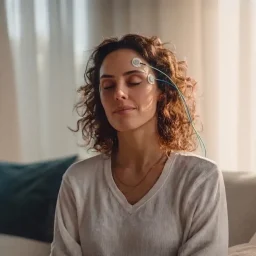
Neurofeedback works by giving your brain real-time feedback on its own electrical activity and training it to shift out of stuck patterns. For burnout specifically, the goal is to rebalance the beta/theta ratio in your frontal lobes, calm down overactive stress circuits, and restore the brainwave patterns associated with clear thinking, sustained energy, and emotional resilience.
At Los Angeles Neurofeedback Center, every burnout protocol starts with a qEEG brain map. This shows us exactly where your brain is dysregulated, because burnout does not look the same in every person. Some clients have excessive high-beta activity from chronic hypervigilance. Others show elevated theta from a brain that has essentially checked out. The brain map tells us which pattern we are working with so the training is precise.
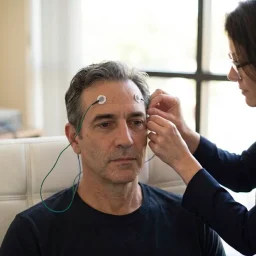
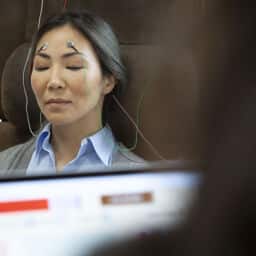
Sessions are comfortable, non-invasive, and typically last 30 to 45 minutes. We also offer CLARITY Direct Neurofeedback, an ultra-brief format that many of our executive clients prefer because the sessions take just minutes and clients often feel the effects right away. For someone billing $500 an hour, that efficiency matters.
Why Neurofeedback Works When Time Off and Supplements Have Not
If you have already tried the usual burnout advice and it did not stick, that is not surprising. Vacations give your brain a temporary break, but they do not change the underlying patterns that got you here. Adaptogens and nootropics can provide a short-term boost, but they are managing symptoms without addressing the root cause. Even therapy, while valuable for processing the emotional weight of burnout, does not directly retrain the brainwave patterns that keep you stuck.
Neurofeedback is different because it works at the level of your brain’s electrical activity. It teaches your brain to produce healthier patterns on its own, without external substances. And because your brain learns those patterns, they tend to persist after training is complete. Many of our clients describe the experience as getting their brain back, the version of themselves that was sharp, motivated, and present.
This is also why neurofeedback pairs so well with the peak performance work we do at LANC. Once the burnout patterns are resolved, many clients continue with training focused on optimizing their cognitive performance beyond baseline. It is not just about recovering. It is about performing at a level you did not think was possible anymore.
Getting Started with Burnout Treatment in Los Angeles
If you have read this far and you are thinking “this sounds like me,” trust that instinct. Burnout does not improve by ignoring it, and the longer those brain patterns stay stuck, the harder they are to shift.
At Los Angeles Neurofeedback Center, your first session starts at $89. That includes a consultation where we talk through what you are experiencing, answer your questions, and determine whether neurofeedback is the right fit for your situation. Our Brentwood office is at 12121 Wilshire Blvd., Suite 810, and we are open seven days a week because we know your schedule does not slow down just because your brain has.
Call us at (323) 705-3031 or visit our website to book. You do not have to keep pushing through on empty. Your brain can work the way it used to. Let us help you get there.
Frequently Asked Questions About Neurofeedback for Burnout
How is professional burnout different from regular stress?
Stress is your brain responding to a specific demand. When the demand passes, the stress usually does too. Burnout happens when stress becomes chronic and your brain’s regulatory systems stop bouncing back. The brainwave patterns associated with focus, motivation, and emotional balance become stuck in a depleted state. This is why burnout feels different from a tough week. It is a neurological shift, not just a mood.
Can neurofeedback actually reverse burnout, or does it just manage symptoms?
Neurofeedback addresses the underlying brainwave dysregulation that sustains burnout, which means it targets the root cause rather than just the surface symptoms. By retraining your brain to produce healthier electrical patterns, the improvements tend to persist after treatment is complete. Most clients report lasting gains in focus, energy, and emotional stability that hold well beyond their final session.
How quickly will I notice a difference with neurofeedback for burnout?
Many clients notice subtle shifts within the first few sessions, often starting with improved sleep quality and a clearer head in the morning. More significant changes in focus, motivation, and emotional resilience typically emerge over the first 10 to 15 sessions. The full protocol usually runs 20 to 30 sessions depending on the severity of your burnout.
I am a high-performing executive. Will neurofeedback slow me down or change my edge?
The opposite. Burnout has already dulled your edge, even if you are still functioning at a high level. Neurofeedback restores the brainwave patterns that made you sharp in the first place. Many of our executive clients report that after treatment, their thinking is clearer, their decision-making is faster, and they have more mental stamina than they have had in years. We are not changing who you are. We are giving your brain back its full capacity.
Is burnout the same as depression, and does neurofeedback treat both?
Burnout and depression share some overlapping symptoms, especially emotional flatness and low motivation, but they have different causes and different brainwave signatures. Burnout is driven by chronic occupational stress, while depression involves broader neurochemical and brainwave imbalances. The qEEG brain map we do at the start of treatment helps us distinguish between the two and design a protocol that matches what is actually happening in your brain. Neurofeedback can address both, but the approach is tailored to the specific patterns we find.
What if my burnout is also causing anxiety or attention problems?
That is extremely common, and neurofeedback is well suited for it. Burnout frequently co-occurs with heightened anxiety, scattered attention, and irritability because the same brain regions are involved. Our treatment protocols can address multiple patterns simultaneously. Many clients come in for burnout and find that their anxiety and focus issues improve as a natural part of the same training process.
Do I need to take time off work to do neurofeedback for burnout?
No. Sessions at our Brentwood office are designed to fit into a working professional’s schedule. Standard sessions run 30 to 45 minutes, and our CLARITY Direct Neurofeedback sessions take just a few minutes. We are open seven days a week with early morning and evening availability. Most clients come in before work, during lunch, or on the way home without disrupting their day.
Why should I choose neurofeedback over executive coaching or therapy for burnout?
Executive coaching and therapy are both valuable, but they work at the behavioral and psychological level. If your burnout has a neurological component, and for most professionals it does, those approaches alone may not be enough. Neurofeedback works at the brain level, directly retraining the electrical patterns that keep you stuck in burnout mode. Many of our clients use neurofeedback alongside coaching or therapy and find the combination far more effective than any single approach.
Frequently Asked Questions About Neurofeedback for Burnout
What is burnout and how does it affect the brain?
Burnout is a state of chronic physical and emotional exhaustion caused by prolonged stress, often related to work or caregiving demands. At the brain level, burnout disrupts the balance between the sympathetic and parasympathetic nervous systems, keeping your brain locked in a heightened stress response. This leads to difficulty concentrating, mental fog, emotional flatness, irritability, and a sense of detachment from activities you once enjoyed. Over time, the brain becomes less efficient at switching between focused work and rest, which is why simply taking a vacation often fails to resolve burnout. Neurofeedback addresses burnout by retraining these stuck brainwave patterns at their source.
How does neurofeedback treat burnout?
Neurofeedback treats burnout by helping the brain break free from the rigid, stress-driven patterns that keep you feeling exhausted and unfocused. At Los Angeles Neurofeedback Center, we use CLARITY Direct Neurofeedback, which delivers a tiny, imperceptible electrical signal to the brain that encourages it to reset and self-regulate. Unlike talk therapy or medication, neurofeedback works directly on the brain’s electrical activity, addressing the root cause of burnout rather than just managing symptoms. Many patients report feeling clearer, calmer, and more energized after just a few sessions, making it a particularly appealing option for busy professionals in West Los Angeles.
How many neurofeedback sessions are needed to recover from burnout?
The number of sessions varies depending on the severity and duration of your burnout. With CLARITY Direct Neurofeedback at Los Angeles Neurofeedback Center, many patients notice meaningful improvements within the first three to five sessions, including better sleep, sharper focus, and reduced emotional reactivity. A typical treatment course for burnout might range from 10 to 20 sessions, though some patients choose to continue with maintenance sessions to sustain their results over time. Your clinician will work with you to create a treatment plan that fits your schedule and recovery goals.
Is neurofeedback better than therapy or medication for burnout?
Neurofeedback is not necessarily better than therapy or medication, but it works differently and can be a powerful complement to both. Therapy helps you develop coping strategies and process the emotional toll of burnout, while medication can manage specific symptoms like anxiety or insomnia. Neurofeedback addresses the underlying brain dysregulation that perpetuates burnout, helping your nervous system return to a more balanced state. Many patients at Los Angeles Neurofeedback Center use neurofeedback alongside therapy and find that it accelerates their recovery by making their brain more receptive to the work they are doing in other treatment modalities.
Can burnout come back after neurofeedback treatment?
While neurofeedback helps your brain develop healthier patterns of self-regulation, it does not make you immune to future stress. If you return to the same high-pressure environment without making any changes to your workload or boundaries, burnout symptoms can re-emerge over time. However, many patients find that after completing a course of neurofeedback, they are better equipped to recognize early signs of burnout and manage stress more effectively. Some patients at Los Angeles Neurofeedback Center choose periodic maintenance sessions to keep their brain functioning at its best, especially during particularly demanding seasons at work.
What does a neurofeedback session for burnout feel like?
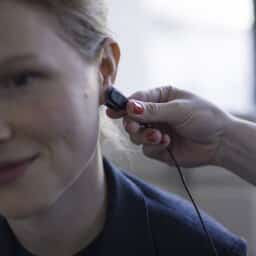
A neurofeedback session at Los Angeles Neurofeedback Center is a comfortable and relaxing experience. Small sensors are placed on your scalp to monitor your brainwave activity, and the CLARITY Direct Neurofeedback system delivers a gentle signal that most patients cannot feel at all. Sessions typically last about 20 to 30 minutes, during which you simply sit quietly. Many patients describe feeling a sense of calm or mental clarity during or immediately after their session. There is no pain, no medication, and no recovery time needed, so you can return to your day immediately after treatment.