
When you search for “neurofeedback practitioner Los Angeles” or “neurofeedback therapists Los Angeles,” you will encounter a confusing variety of professional titles. Neurofeedback practitioner. Neurofeedback therapist. Neurofeedback specialist. Neurofeedback technician. Board-certified neurofeedback provider. The titles sound interchangeable, but they are not—and the distinctions matter more than most people realize when choosing who will train their brain.
Unlike fields such as psychology or psychiatry, which have clear licensure requirements and protected titles, neurofeedback exists in a regulatory space where the terminology is not standardized. Someone calling themselves a “neurofeedback therapist” might be a licensed psychologist with years of clinical neurofeedback experience, or they might be someone who completed a weekend course. The title alone tells you almost nothing about their actual qualifications.
This article clarifies the landscape. We explain what the different titles mean in practice, which credentials carry weight, what training and supervision standards exist, and how to evaluate whether a neurofeedback provider in Los Angeles has the depth of expertise to work with your specific brain. At Los Angeles Neurofeedback Center, we are an independent neurofeedback practice staffed by dedicated practitioners who specialize exclusively in neurofeedback and biofeedback. We believe informed clients make better decisions, and the lack of clarity in our field has made those decisions harder than they should be.
Why the Terminology Is Confusing—and Why It Matters
Neurofeedback is not a licensed profession in California or any other state. There is no state board of neurofeedback examiners, no required curriculum, and no legally protected title. This means that anyone can technically offer neurofeedback services and call themselves whatever they like—practitioner, therapist, specialist—without meeting any minimum qualification standard.
In practice, this creates a wide spectrum of provider quality that has nothing to do with titles. At one end, you have dedicated neurofeedback practitioners and clinics that do neurofeedback full-time—they design individualized protocols, manage hundreds of cases, and stay current with the research because it is their entire professional focus. At the other end, you have providers who purchased a neurofeedback system, completed basic manufacturer training, and offer it as an add-on service to a practice focused on something else entirely. A licensed therapist who runs ten neurofeedback sessions a month has far less practical expertise than a dedicated practitioner who runs ten sessions a day.
The distinction matters because neurofeedback is not just about running a machine. It requires judgment: designing appropriate protocols, recognizing when a client is not responding as expected, adjusting training parameters, identifying contraindications, and understanding how neurofeedback interacts with other therapies. Organizations like the International Society for Neuroregulation and Research (ISNR) promote evidence-based standards precisely because this expertise gap is so significant. This kind of expertise comes from volume and specialization, not from holding a particular license. A provider who focuses exclusively on neurofeedback develops pattern recognition and intuition that a generalist practitioner—regardless of how many letters follow their name—simply cannot match.
Practitioner, Therapist, Specialist: What Each Title Usually Means
While none of these titles are legally standardized, they tend to follow informal patterns in practice. Understanding these patterns helps you ask better questions when evaluating a provider.
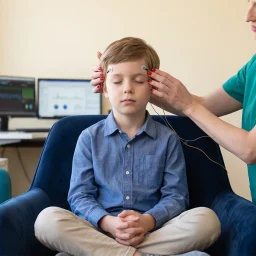
Neurofeedback Practitioner refers to someone who provides neurofeedback as a primary professional focus. Practitioners may come from a variety of educational backgrounds—neuroscience, nursing, psychology, health sciences—but what defines them is their specialization in neurofeedback itself. The strongest practitioners have deep, hands-on experience: thousands of sessions, hundreds of clients, and the kind of pattern recognition that only comes from doing this work full-time. An independent neurofeedback practice staffed by dedicated practitioners often delivers more focused, experienced care than a multi-disciplinary clinic where neurofeedback is a secondary offering.
Neurofeedback Therapist usually implies that the person holds a mental health license (psychologist, LCSW, MFT, or similar) and has integrated neurofeedback into a broader therapeutic practice. The advantage of this arrangement is that they can combine neurofeedback with talk therapy or behavioral interventions. The potential limitation is that neurofeedback may be one of many modalities they offer rather than their primary area of expertise. A licensed therapist who runs a handful of neurofeedback sessions per week will have significantly less neurofeedback-specific experience than a full-time practitioner.
Finding the Right Neurofeedback Practitioner in Los Angeles
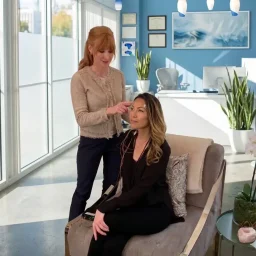
Los Angeles Neurofeedback Center is an independent neurofeedback practice—not a multi-disciplinary therapy office that added neurofeedback as a side service. As a leading neurofeedback practitioner in Los Angeles, our team specializes in neurofeedback and biofeedback because that is the entire focus of our practice. This specialization means our team builds the kind of deep, daily expertise that comes from making neurofeedback our sole clinical focus rather than one tool among many.
We use CLARITY Direct Neurofeedback for in-office sessions, Myndlift for home-based supplemental training, and HeartMath biofeedback for autonomic nervous system regulation—selecting the right combination based on each individual’s needs and goals. We also maintain collaborative relationships with psychiatrists, therapists, and physicians across Los Angeles so that our neurofeedback work integrates with each client’s broader care team.
We serve clients throughout Los Angeles, including West Los Angeles, Venice, Santa Monica, Brentwood, Mar Vista, Culver City, and the broader metropolitan area. Whether you have been searching for a neurofeedback practitioner in Los Angeles or a neurofeedback therapist in Los Angeles, the critical question when choosing a neurofeedback practitioner in Los Angeles is not what title someone uses—it is whether they have the specialization, volume of experience, and clinical rigor to work with your specific brain effectively.
If you are evaluating providers and want to understand how our approach compares, you can book a consultation online or call the center directly. We are happy to explain our credentials, process, and how we design individualized protocols. For information on costs, see our guide to affordable neurofeedback in Los Angeles.
Frequently Asked Questions: Neurofeedback Providers in Los Angeles
What is the difference between a neurofeedback practitioner and a neurofeedback therapist?
In general usage, a “neurofeedback practitioner” is someone who provides neurofeedback as their primary professional focus, while a “neurofeedback therapist” usually holds a mental health license (psychologist, LCSW, MFT) and integrates neurofeedback into a broader therapy practice. Neither title is legally regulated in California, so the title alone does not indicate qualification level. What matters most is neurofeedback-specific experience: a full-time practitioner who has managed hundreds of cases and reads qEEGs daily will typically have deeper neurofeedback expertise than a licensed therapist who offers neurofeedback as one service among many.
Can a non-licensed person legally provide neurofeedback in California?
Yes. Neurofeedback is not a licensed profession in California or any other state, which means there are no legal requirements specific to practicing it. Many of the field’s most experienced providers are dedicated neurofeedback practitioners rather than licensed therapists—their expertise comes from specialization and volume of clinical experience rather than a mental health license.
What training does it take to become a qualified neurofeedback practitioner?
The path to competent neurofeedback practice typically involves foundational education in neuroscience or a health-related field, a didactic course covering neurofeedback theory and instrumentation (usually 36 or more hours), supervised clinical practice under a BCIA-approved mentor (typically 25 or more client sessions observed and reviewed), passing the BCIA board certification exam, and ongoing continuing education. Many qualified practitioners also complete additional training in qEEG interpretation, specific neurofeedback modalities, and clinical populations. The entire process from initial training to independent competence usually takes one to two years, and true mastery develops over years of full-time clinical practice.
Should I choose a provider based on their professional title or their neurofeedback experience?
Always prioritize neurofeedback experience over professional title. A dedicated neurofeedback practitioner with ten years and hundreds of clients has far more neurofeedback expertise than a psychologist who added neurofeedback to their practice last year, even though the psychologist holds a more advanced general clinical degree. The best providers combine neurofeedback specialization with strong foundational knowledge and collaborative relationships with therapists and physicians. Ask how many years they have provided neurofeedback full-time, and how many clients they have treated with your condition.