

NEUROFEEDBACK CAN IMPROVE STUDENT’S ACADEMIC AND TEST PERFORMANCE
Imagine this: anxiety about upcoming exams and test performance, difficulty focusing in class, sleepless nights, and long waits at Starbucks. For many people, this imaginary scenario would incite anxiety and stress. For college students, this is their everyday reality as they struggle to maintain scholastic performance. College students today face tremendous pressure to academically succeed and achieve high test performance to obtain their degrees.
Heavy coursework, challenging demands, new transitions, and high rates of anxiety can cause limitations in performance. These factors place obstacles in students’ capacity to achieve high test performance and complete their college education. The question then becomes how can college students improve their performance when there are so many distractions for the brain? Read on to see how neurofeedback therapy could help improve test performance!
College Life
When students enter university programs they are presented with a challenging curriculum, new transitions, and pressure to have high test performance. The rigor and amount of assignments increases and a greater emphasis is placed on test performance that ultimately defines academic grades. During this time, students need to improve their cognitive skills like attention, focus, and memory to achieve high test performance. In order to achieve high academic performance, students often sacrifice sleep, consume large amounts of caffeine, limit their time with friends and family, and more. Without many coping strategies and tools, these experiences can result in overwhelming feelings of anxiety for many college students and impact their overall performance.
Anxiety and Test Performance
The demand to maintain a high scholastic performance can be overwhelming and taxing for the brain and nervous system. Students’ brains are often challenged to a point beyond their thresholds in order to achieve high test performance. Students may not have the skills to reduce anxiety naturally which can detrimentally impact performance. For example, test anxiety can often interfere with performance if a student is not able to focus on the exam. Without many resources to turn to, students may feel stuck.
Memory, focus, and attention span are all important factors in achieving high test performance. Performance expectations and grade-defining exams generate pressure that is taxing on the brain and nervous system as they require large amounts of focus, concentration, engagement, and memory. With so much mental energy expended on academic performance, students can become prone to burnout. High test performance often requires ongoing and heavy usage of mental energy and brain performance.
Over the course of a student’s college career, they may be depleted of these mental resources and in need of a quick reboot to their brains to maintain high test performance. The Los Angeles Neurofeedback Center provides an incredibly useful resource that can help improve focus, memory, attention, and overall improve test performance – neurofeedback therapy!
Neurofeedback Therapy
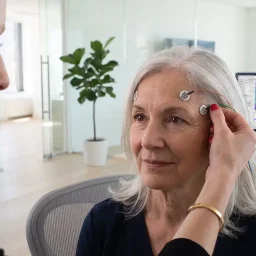
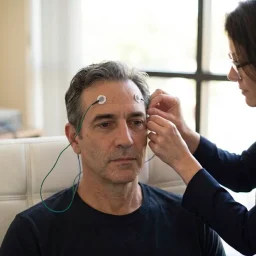
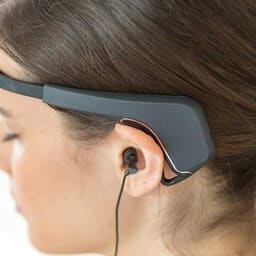
Neurofeedback therapy, a form of biofeedback therapy, utilizes physiological feedback to help the brain self-regulate and build resilience. It can optimize mental performance while reducing anxiety in college students to improve test performance. Neurofeedback can help the brain get unstuck from deeply grooved neural pathways that have been contributing to anxiety, lack of focus, memory issues, distractibility and lower test performance. By bringing the brain back to a state of homeostasis, neurofeedback could help the brain create new neural pathways that can improve memory, focus, attention, and ultimately, improve test performance.
Neurofeedback Therapy and Improving Focus and Attention
Simply put, neurofeedback can help regulate the brain waves that may be associated with distractibility, inattention, and memory difficulties which could be contributing to lower test performance. Recent research has gathered more evidence for the efficacy of neurofeedback in improving focus and attention and test performance. Students with ADHD, in particular, might struggle with attention, organization, and concentration, cognitive skills needed for high test performance. There is growing evidence that supports neurofeedback’s efficacy in helping students with ADHD in improving attention and focus which can improve overall test performance.
Harris et al. (2018) conducted a study that aimed to understand the effects of neurofeedback on college students who had ADHD. After receiving neurofeedback sessions, participants exhibited improvements in hyperactivity, attention, anxiety, depression and ADHD self-concept. Moreover, the results conveyed that there was an increase in academic self-efficacy in college students as well (Harris et al., 2018). This line of research supports the efficacy of neurofeedback in the improvement of focus and attention which can improve test performance.
Neurofeedback Therapy and Improving Memory
Research in neurofeedback therapy has also shown promise for the improvement of memory which could lead to higher test performance. Campos da Paz et al. (2018) conducted a study that sought to understand the effects of neurofeedback on working memory. The study’s results conveyed that participants in the neurofeedback training group received a higher number of correct responses in visual working memory tasks compared to the sham neurofeedback training group and no neurofeedback training group (Campos da Paz et al., 2018). By achieving a higher number of correct responses on exams, students can improve their overall performance.
A different randomized controlled study, Wang and Hsieh (2013) collected evidence which supports the use of neurofeedback therapy in the improvement of memory performance, attention and executive functioning in young adults. A third study by Hsueh et al. (2016) also found evidence for the efficacy of neurofeedback therapy in the improvement of episodic and working memory skills in a sample of young adults. These studies convey the benefits that neurofeedback therapy can have on memory for students which could be used to improve their performance.
Improve Test Performance with Neurofeedback
This is where neurofeedback therapy can be your new study buddy and help improve academic performance! The Los Angeles Neurofeedback Center offers Direct Neurofeedback therapy at the office and remote neurofeedback you can do at home. With Direct Neurofeedback therapy, college students are able to sit back, relax and enjoy the benefits of a customized neurofeedback protocol that can help improve your test performance. If you are interested in improving your academic performance, try neurofeedback for yourself at the Los Angeles Neurofeedback Center. Schedule your first session with us here: Do not procrastinate and start improving your test performance now!
References
Campos da Paz, V. K., Garcia, A., Campos da Paz Neto, A., & Tomaz, C. (2018). SMR neurofeedback training facilitates working memory performance in healthy older adults: A behavioral and EEG study. Frontiers in behavioral neuroscience, 12, 321.
Harris, S., Lambie, G.W., & Hundley, G. (2018). The Effects of Neurofeedback Training on College Students’ Attention Deficit Hyperactivity Disorder Symptoms. Counseling outcome research and evaluation, 10(2), 64-77.
Hsueh, J. J., Chen, T. S., Chen, J. J., & Shaw, F. Z. (2016). Neurofeedback Training of Eeg Alpha Rhythm Enhances Episodic and Working Memory. Human brain mapping, 37(7), 2662–2675.
Wang, J.R., & Hsieh S. (2013). Neurofeedback Training Improves Attention and Working Memory Performance. Clinical Neurophysiology, 124(12), 2406-2420.
Frequently Asked Questions About Neurofeedback for College Students
How can neurofeedback help with college test anxiety?
Neurofeedback helps reduce test anxiety by training the brain to shift out of overactive stress patterns and into calmer, more focused states. Many college students experience excessive beta wave activity in the frontal lobes during high-pressure situations like exams, which triggers the fight-or-flight response and interferes with recall and concentration. Through repeated neurofeedback sessions, students learn to produce brainwave patterns associated with relaxed alertness, allowing them to access stored knowledge more easily and think clearly under pressure. Students at Los Angeles Neurofeedback Center often report improved confidence and reduced panic during exams after completing a training protocol.
Can neurofeedback improve focus and concentration for studying?
Yes, neurofeedback is one of the most effective non-medication approaches for improving sustained attention and concentration. The training targets brainwave patterns associated with focused attention, particularly the ratio of theta to beta waves in the prefrontal cortex. Students who struggle with distraction, procrastination, or an inability to maintain focus during long study sessions often see significant improvement after a course of neurofeedback. The skills the brain develops through training tend to be lasting, meaning students carry these benefits throughout their academic career and beyond.
How many neurofeedback sessions does a college student typically need?
Most college students begin to notice improvements in focus, anxiety levels, and academic performance within 10 to 15 sessions, though a full training protocol typically involves 20 to 40 sessions depending on the severity of symptoms and individual goals. With CLARITY Direct Neurofeedback offered at Los Angeles Neurofeedback Center, many students report feeling noticeable shifts even sooner because this approach works more quickly than traditional neurofeedback by delivering a gentle signal that helps the brain reorganize its patterns. Sessions are brief and can be scheduled around class schedules to minimize disruption to academic life.
Is neurofeedback a good alternative to medication for college students with anxiety?
Neurofeedback offers a drug-free approach that many college students and their families prefer because it addresses the underlying brainwave dysregulation rather than masking symptoms with medication. Unlike anti-anxiety medications, neurofeedback does not cause side effects such as drowsiness, cognitive dulling, or dependency, which can be particularly problematic for students who need to stay sharp academically. Neurofeedback can be used on its own or alongside medication under the guidance of a prescribing physician, and some students are able to reduce their medication over time as their brain learns to self-regulate more effectively.
Can neurofeedback help with sleep problems that affect academic performance?
Sleep disturbances are extremely common among college students and directly impact memory consolidation, emotional regulation, and cognitive performance. Neurofeedback can address the brainwave imbalances that contribute to difficulty falling asleep, staying asleep, or achieving restorative deep sleep. By training the brain to transition more smoothly between alert and restful states, students often find that their sleep quality improves significantly, which in turn enhances their ability to learn, retain information, and perform well on exams. Improved sleep also helps reduce anxiety and mood instability that can compound academic challenges.
Does neurofeedback work for students who have both ADHD and anxiety?
Neurofeedback is particularly well-suited for students dealing with co-occurring ADHD and anxiety because it can address both conditions simultaneously through targeted brainwave training. Traditional medications for ADHD, such as stimulants, can sometimes worsen anxiety symptoms, creating a difficult treatment dilemma. Neurofeedback avoids this problem entirely by training the brain to improve attention and reduce anxious overactivation at the same time. At Los Angeles Neurofeedback Center, we create individualized protocols that address each student’s unique combination of symptoms, helping them achieve better focus without increasing their stress response.
Learn how neurofeedback can reduce test anxiety and improve academic performance.