

AFTER A BREAK UP
After a break up, the first few hours, days, weeks, months can be filled with feelings you do not want to feel and thoughts you do not want to think. You can feel totally dysfunctional after a break up, unable to sleep, unable to eat, unable to think and making errors at work. Logically you may understand the situation, however, your physical body and emotions can feel overwhelmed. This is because after a break up, your body is in a state of shock.
Amy Chan of Renew Breakup Bootcamp says “the person that you were used to talking to, cuddling with, getting in fights with, having makeup sex with is no longer there. The loss will feel lonely and scary, and on a scientific standpoint, you’re no longer getting your doses of dopamine and oxytocin (feel-good chemicals) from your partner. Your body is craving the chemical fix but isn’t getting it so it’s in a perpetual state of WTF.”
Classic Break Up Advice
Traditional suggestions you can do after a break up to heal faster include:
- Cut all contact
- Let your emotions out
- Accept the fact that it’s over & don’t analyze what you could have done different
- Don’t rush into another relationship
- Find yourself
- Plan something fun without your ex that you like to do
- Develop a mindful life so you can stay calm and take on whatever life throws your way.
Easier said than done. How do you practice self-care and maintain professionalism when your body and nervous system is in panic mode? In a state of shock, or fight or flight, it can be extremely difficult to not compulsively analyze where it went wrong and how to get it back. It can be very difficult to cut all contact with the person who used to be your 24/7 partner. Moreover, after a break up, you may have additional break up feelings of inadequacy, anger, jealousy, blame. Trying to be mindful with these negative feelings can drive you to other compulsions, like overeating ice cream, binging tv shows, or swiping ad nauseum through photos of the ex.
Scientific Break Up Healing
We often see people after a break up because our technology can truly help end a negative feedback loop or behavior chain. For instance, Tedi Asher, PhD of Harvard Medical School, says “an important premise of neurofeedback training is that our brains have the ability to change the way they function naturally. Research over the last several decades indicates that our brains are, in fact, malleable. The question, then, is how to influence brain function to stimulate this change. Brain training is becoming increasingly feasible using a technique called neurofeedback, which allows individuals to change the way their brains function by responding to personalized feedback about how their own brains work.”
This video featured by NPR explains in detail how singer Dessa was “tired of being in love with her ex-boyfriend. So she set out to retrain her brain.” As this video demonstrates, Dessa got over her ex with an fMRI and science. She proved to herself she could choose to fall out of love. We live in such an advanced society, it is time we let holistic technology offer break up help so we are not by ourselves trying to white knuckle it after a break up.
Cutting Edge Break Up Advice
Direct neurofeedback is a unique tool to help heal faster after a break up, in that it doesn’t tell you what you should be feeling or doing instead of where you’re at. Rather it goes straight to the source: your nervous system and brain, bringing erratic brain waves and patterns back into synergy. So you can feel more clear headed and less compulsive to process why and what has happened. For instance, West LA Clients from LA Neurofeedback Center have said
- “My thought process now feels more clear, less doubtful, and no longer stuck in a feedback loop.”
- “I am more focused, calmer, more in tune with true feelings and emotions and able to process life in a significantly easier way.”
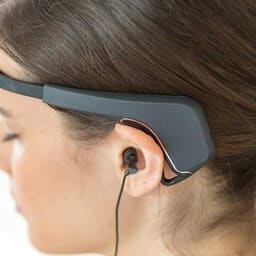
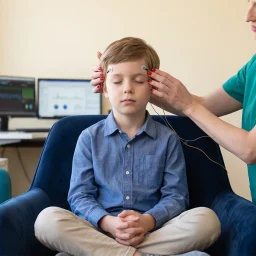
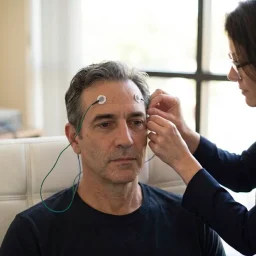
LA Neurofeedback Center uses the leading-edge neurofeedback technology. Unlike older neurofeedback devices, DIRECT Neurofeedback leads to enduring results in fewer sessions with client’s often feeling a change after just the first sessions. DIRECT Neurofeedback uses an FDA-approved EEG to read the client/patient’s brainwaves AND send an ultra-low, imperceptible electromagnetic signal directly to the outer tissue of the brain. This brief variation in brain waves allows the brain to reorganize itself, without conscious force from the client/patient. After repeat sessions, the change is enduring. On average less than half of the number of sessions are needed compared to traditional neurofeedback.
Break Up Recovery
After you’ve recovered from the immediate trauma after a break up, how can you prepare for a better experience next time? It is natural for your mind to jump to the worst outcome, for instance, you will never find someone that great again. Even if it was your decision, it can be hard not to second guess yourself. Whether you never want to see your ex again or you want to get your ex back, you need to be able to self-regulate and communicate calmly and clearly. Direct Neurofeedback and our mobile biofeedback system called HeartMath can help bring out your most resilient, creative, clear-headed and authentic self.
Direct Neurofeedback can help with the comorbid disorders like break up anxiety and break up depression. It also can increase focus, performance and motivation after a break up. HeartMath biofeedback has been shown over 30 years to reduce stress, increase energy, balance hormones, and improve mental clarity and performance in just a few minutes a day. HeartMath is something you can travel with and use in the comfort of your own home. Research has shown improvements in brain function, emotional processes and emotional stability, and cognitive function, when using the HeartMath solution to regulate your heart rhythms.
Break Up In the End
After a break up, you have a moment in time to connect to your best self. After a loss, you have the space and opening to move towards even greater happiness. The issue always is, how. Science shows us brain training and heart wave training, like Direct Neurofeedback and HeartMath, can be the guiding hand to naturally recover yourself from the inside out. The best part is you don’t have to think about how to do it, you can relax and let your nervous system and brain re-organize themselves towards stability. In doing so, you can heal faster and be ready for a great relationship to re-enter your life.
Just last week a client who uses both direct neurofeedback and heartmath said her mother mentioned her ex’s name and she had a moment where she didn’t remember who he was. We cannot guarantee “Eternal Sunshine of the Spotless Mind” results. However, if your previous relationship was not healthy for you, you can naturally be drawn to healthier thoughts, behaviors, and relationships using direct neurofeedback and biofeedback after a break up.
Frequently Asked Questions About Neurofeedback for Emotional Recovery
How can neurofeedback help with emotional pain after a breakup?
A breakup triggers intense neurological responses similar to withdrawal and grief, with brain regions associated with physical pain becoming highly activated. Neurofeedback helps by training the brain to move out of these stuck emotional patterns and restore more balanced brainwave activity. By calming overactive limbic system responses and strengthening prefrontal cortex regulation, neurofeedback enables you to process difficult emotions without becoming overwhelmed by them. Many clients at Los Angeles Neurofeedback Center report that the obsessive rumination and emotional flooding that follow a breakup diminish significantly after beginning neurofeedback training.
Can neurofeedback reduce anxiety and depression caused by a relationship ending?
Yes, neurofeedback is effective at addressing both the anxiety and depression that commonly follow the end of a significant relationship. Breakups often create a neurological state where the brain oscillates between hyperarousal marked by anxious thoughts and rumination and hypoarousal characterized by low motivation and depressive feelings. Neurofeedback trains the brain to find a more stable middle ground by promoting balanced activity across key brain regions. This can help restore healthy sleep patterns, reduce the intrusive anxious thoughts that make it hard to move forward, and lift the emotional heaviness that accompanies grief.
How does neurofeedback compare to talk therapy for recovering from a breakup?
Neurofeedback and talk therapy work through different mechanisms and are often most powerful when used together. Talk therapy helps you process the narrative and meaning of the relationship, develop insight into patterns, and build coping strategies through cognitive understanding. Neurofeedback works at the neurophysiological level, directly training the brain to regulate its own emotional responses without requiring conscious effort or verbal processing. For people who find themselves intellectually understanding that they need to move on but feeling unable to stop the emotional pain, neurofeedback can address the underlying brain dysregulation that talk therapy alone may not reach.
How quickly can neurofeedback help after a breakup?
Many clients begin to notice a shift in their emotional intensity within the first few sessions of neurofeedback, particularly with CLARITY Direct Neurofeedback available at Los Angeles Neurofeedback Center. The acute emotional reactivity, sleep disruption, and difficulty concentrating that follow a breakup often improve early in the training process. A more comprehensive protocol of 15 to 30 sessions is typically recommended to build lasting resilience and help the brain establish new, healthier patterns of emotional regulation that support long-term recovery and future relationship health.
Can neurofeedback help break the cycle of obsessive thoughts about an ex?
Obsessive thinking after a breakup is driven by specific brainwave patterns, particularly excessive high-beta activity in the frontal lobes that keeps the mind locked in repetitive thought loops. Neurofeedback directly targets these overactive patterns by training the brain to reduce this excessive fast-wave activity and shift into calmer, more present-focused states. As the brain learns to self-regulate more effectively, the compulsive need to replay conversations, check social media, or mentally rehash the relationship naturally decreases. This is one of the areas where clients often report the most dramatic improvement from neurofeedback training.
Is neurofeedback safe to use while also taking medication for anxiety or depression?
Neurofeedback is a non-invasive training method that is generally safe to use alongside medication for anxiety or depression. Many clients at Los Angeles Neurofeedback Center begin neurofeedback while taking prescribed medication and work with their healthcare providers to monitor their progress. As the brain develops better self-regulation through neurofeedback training, some clients find that they are able to reduce their medication dosages over time under their doctor\u0027s guidance. It is important to note that neurofeedback practitioners do not prescribe or adjust medication, and any changes to medication should always be discussed with your prescribing physician.
Discover how neurofeedback helps process emotional distress and reduce anxiety after difficult life events.