
NEUROFEEDBACK AND YOGA
We Love Yoga
At Los Angeles neurofeedback Center, we love yoga. Some of us are yoga practitioners, some are even yoga teachers. It is effortless to find an overlap between neurofeedback and yoga. They share a common thread. Both neurofeedback and yoga can bring a client to a relaxed, focused state. Because yoga and neurofeedback both reduce stress, promote relaxation, and functioning at peak performance levels, it is important to understand how they work so you can make efficient choices about when to use them. Read on to learn more about the overlaps between direct neurofeedback and yoga, as well as when one might be more optimal than the other.
What Is a “Yoga Buzz”?
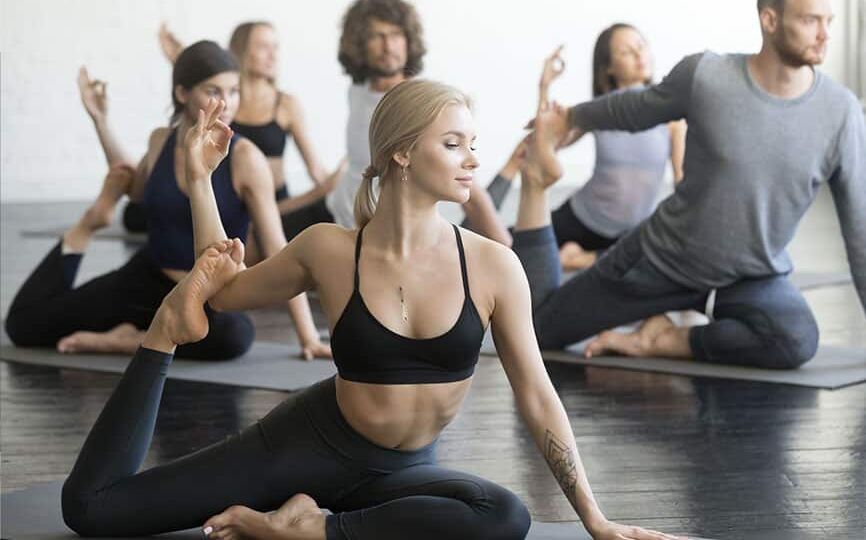
You know the “yoga buzz” you feel after a class. You feel one with yourself and one with the world! That “yoga buzz” feels like a clear-mind and a resilient appetite for life. At the Los Angeles Neurofeedback Center, we call the “yoga buzz” a “calm alert” state.
Our coaches are trained and motivated to connect our clients to that blissful “calm alert” state as easily and efficiently as possible. The best part? In a direct neurofeedback session, you can reach that “calm alert” state in very little time. Plus, you do not change clothes or break a sweat. Read on to learn about why you triggered a “yoga buzz.”
What Causes a “Yoga Buzz”?
Sometimes you enter a yoga class feeling like a harried wombat only to glide out after like a powerhouse queen or king. This shift in your experience is due to the poses and breathingbalancing your nervous system. We know you are not a “harried wombat,” but that awful feeling is a clue you are lingering too long in overdrive, or, the “fight or flight” response of your nervous system. Through the yoga class, you took the time and inward focus for your nervous system to shift into a different mode: rest and digest. A balance occurred.
Your Nervous System
Your nervous system uses your fingers, eyes, ears to relay information about your world to your brain. Just as there are two sides to a coin, there are two modes to your nervous system. When these modes are balanced, we feel clear headed and capable.
For all our yogi/yogini scientists out there, the relaxation mode is called your parasympathetic nervous system. The alert mode is your sympathetic nervous system. To remember the difference, think of a pair of cozy warm socks you pull on to relax. Pair of warm socks > relaxing > parasympathetic nervous system.
Parasympathetic Mode: Relaxation
Relaxation mode is when your body focuses on its internal work. You are being: resting, digesting, relaxing. Your body digests your food. It eliminates the waste. You do not “think” about how to digest food. You do not stand up and manually digest food like it’s your job. You sit back, don’t think, and let your body do its thing. But you know how your digestion can go wonky when you are anxious? It is because anxiety and racing thoughts are linked to the alert mode of your nervous system.
Sympathetic Mode: Alert
You enter alert mode when you’re stimulated and being pulled outwards to external events and people. We need our alert mode to walk, drive, cook, eat, work, solve problems. The alert mode is scientifically known as the sympathetic nervous system. To remember this, think of a time when you wanted someone to get you. You needed sympathy and you weren’t getting it and you wanted to pull your hair out! Emotional/alert > sympathy > sympathetic nervous system.
Beauty in Balance
One mode is calm, and one mode is alert. When they are work in unison you get “calm alert.” You get your “yoga buzz.” So at the Los Angeles Neurofeedback Center, by promptly shifting your nervous system into “calm alert,” we really are returning your nervous system to its optimal state. Just like a yoga class! A direct neurofeedback session reduces stress and strengthens your relaxation response. Read on to learn the dangers of becoming imbalanced.
Stuck in Overdrive
Whether it was stress at work or a social disappointment, your thoughts got tense, your body followed suit, and you became a contracted, anxious, perhaps even temperamental, version of your true self. Ugh. Get me off this crazy train! Right?
It’s okay. Going into “fight or flight” is part of being human. The problem is when you get stuck in overdrive. Imagine if a car was stuck in overdrive! That car would be destructive to its own machinery, as well as destructive to anyone in its path.
When you are stuck in overdrive it becomes your job to actively make a choice to reboot your nervous system and stop the madness. If you do not actively choose to address your nervous system, breakdowns in your body, mind and emotions will follow. These breakdowns can wreak havoc on your relationships and your livelihood.
Slippery Slope
Say you missed some sleep. At first it was fine because you had a great night out with friends. But the next day, you were distracted or spacey at work. That night you had to catch up on the work you didn’t really do during the day. Afterwards, you couldn’t chill out enough to fall asleep. So now you are more stressed and starting to get bloated or sick. Step by step you are heading to overdrive.
Another example: you have a great new opportunity at work. It means longer hours and you want to do it! You just have to make a trade on your downtime, your relaxation. If you cannot relax, your nervous system won’t shift gears, and you’ll start heading into overdrive. Overdrive leads you to a cycle of stress and anxiety. This doesn’t mean you stop working hard. It means you up your self care game. Do your nervous system a favor and read on to learn how to actively support it.
Up Your Game
You know your true self. You are not perfect, but you are capable. You like being you. It can feel really good to be you. But sometimes life knocks you off our sweet spot. That’s when you know you need to get to a yoga class.
Yet life gains momentum and you find yourself with less time to get to a class when juggling so many other responsibilities. Pulling on the yoga tights, facing down traffic, can turn the experience into 2.5 hours and leave you as stressed as when you started.
Or you are already so drained, the idea of holding Warrior II sends you for the hills.
How great would it be if you had another option? An option that was gentle, non-invasive, and a time-efficient way to get back to your optimal state of mind? Maybe one where you could sit passively and not have to do all the work for once?
Optimal Balance
There is. At the Los Angeles Neurofeedback Center, we want to help you get back to your true self. Not just your true self, your optimal self. Maybe even the self you thought you’d never get to see again.
We offer the $89 intro session so you can experience how quickly your nervous system can shift states. Allow yourself to experience calmer thoughts, relief from stress, and stopping disruptive thought patterns that might be circulating in and out of your head.
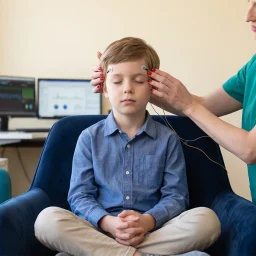
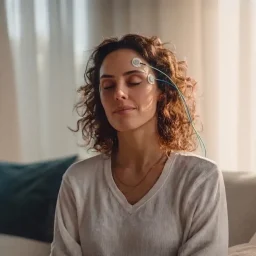
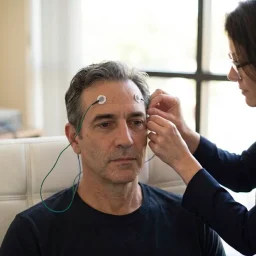
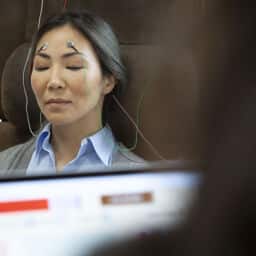
Best yet? You sit, eyes closed if you want, and relax while experiencing a session. You don’t have to change clothes. No spandex required. You don’t have to lift your knee to your nose. No flexibility required. And you have a skilled coach keeping track of your progress. Sound relieving?
The most significant benefit to choosing direct neurofeedback: the work is enduring. Each session moves you closer to a paradigm shift in your nervous system. And as your nervous system returns to its optimal state… it maintains its optimal state.
We Still Love Yoga
By all means, if you have a yoga practice, keep it up! We do! It’s amazing for your hips, your back, your circulation, your glands. Yoga is an amazing workout. You can do yogaon your own time, anywhere. But you need the discipline to keep it up… and when you are in overdrive, with distractions and the fight or flight response, that can seem a very hard choice. Successfully executing anything in overdrive can seem a hard choice!
Neurofeedback and Yoga work towards the same goal: stress reduction and peak performance. However, yoga and direct neurofeedbackuse different strategies. To keep it simple, consider this: yoga is like you turning the light switch on yourself. Direct neurofeedback is getting a direct connection to the power while you sit and relax. It’s time to get more by doing less. Come see us at the Los Angeles Neurofeedback Center and experience it for yourself!
Frequently Asked Questions About Combining Neurofeedback and Yoga
Why do neurofeedback practitioners recommend yoga as a complement to brain training?
Neurofeedback and yoga target overlapping but distinct pathways in the nervous system, making them a powerful combination for holistic wellness. Neurofeedback works directly with brainwave patterns through EEG-based training, while yoga engages the body-mind connection through breathwork, movement, and mindfulness practices that influence the autonomic nervous system from the bottom up. When clients practice yoga alongside their neurofeedback sessions at Los Angeles Neurofeedback Center, the physical and breathing-based regulation from yoga often reinforces and accelerates the brainwave changes occurring through neurofeedback, creating a more complete and resilient state of nervous system balance.
What type of yoga works best alongside neurofeedback?
Gentle, restorative, and breath-focused yoga styles tend to complement neurofeedback most effectively because they emphasize nervous system regulation rather than intense physical exertion. Practices like Hatha yoga, Yin yoga, and restorative yoga activate the parasympathetic nervous system and promote the same calming brainwave shifts that neurofeedback trains. Yoga Nidra, a guided deep relaxation practice, is particularly synergistic with neurofeedback because it systematically guides the brain through progressively deeper states of awareness that mirror the alpha and theta brainwave patterns targeted in many neurofeedback protocols. More vigorous styles like Vinyasa or Power yoga can also be beneficial but are better suited for clients whose neurofeedback goals include peak performance and energy optimization.
Can yoga breathing exercises enhance neurofeedback results?
Yes, yogic breathing techniques known as pranayama can significantly enhance neurofeedback outcomes by directly influencing brainwave states through the respiratory system. Slow, rhythmic breathing activates the vagus nerve and shifts the autonomic nervous system toward parasympathetic dominance, which supports the calmer brainwave patterns that neurofeedback is often training the brain to produce. Techniques like alternate nostril breathing have been shown in research to balance activity between the left and right brain hemispheres, while extended exhale breathing rapidly activates the relaxation response. Practicing these techniques between neurofeedback sessions helps maintain and deepen the neurological gains made during training.
How does yoga affect brainwave activity?
Research using EEG measurements has shown that yoga practice produces measurable changes in brainwave activity that align with improved mental health and cognitive function. Regular yoga practitioners demonstrate increased alpha wave production, which is associated with relaxed alertness and reduced anxiety. Meditation components of yoga increase theta wave activity, which is linked to deep relaxation, creativity, and emotional processing. Long-term yoga practice has also been associated with increased gamma wave coherence, which reflects heightened awareness and integrated brain function. These brainwave changes overlap significantly with the goals of many neurofeedback protocols, which is why the two practices work so well together.
Is it better to do yoga before or after a neurofeedback session?
Both timing approaches offer benefits, and the best choice depends on your individual goals and how your nervous system responds. Practicing gentle yoga or breathing exercises before a neurofeedback session can help calm an overactive mind and prime the brain to be more receptive to the training, which may make the session more effective. Practicing yoga after neurofeedback can help integrate and deepen the neurological shifts that occurred during the session while extending the calm, focused state that many clients experience post-training. Many clients at Los Angeles Neurofeedback Center find that even a brief 10 to 15 minute yoga or breathing practice on the day of their session enhances their overall results.
Can neurofeedback help deepen my yoga and meditation practice?
Many experienced yoga practitioners and meditators seek out neurofeedback specifically because it can help them break through plateaus in their practice. Neurofeedback trains the brain to access meditative brainwave states more quickly and reliably, which can make it easier to drop into deep states of focus and awareness during yoga and meditation. Clients often report that after a course of neurofeedback, their meditation sessions feel deeper and more consistent, their ability to maintain present-moment awareness during yoga improves, and the mental chatter that typically interrupts their practice diminishes significantly. In this way, neurofeedback and yoga create a virtuous cycle where each practice enhances the other.
Visit our West LA center for neurofeedback therapy tailored to your unique brain patterns.