

You walk into a room and forget why you are there. You lose a word mid-sentence, a word you have used a thousand times. You read the same paragraph three times and still cannot absorb it. You set your coffee down somewhere and find it two hours later, cold, in a place that makes no logical sense. You are not imagining it — and postpartum brain fog treatment can help.
If you just had a baby, people will tell you this is normal. They will call it “mom brain” and laugh about it like it is a charming quirk of new motherhood. And while they mean well, that response can feel dismissive when you are living inside of it. Because what you are experiencing is not charming. It is disorienting. It can feel like you have lost access to a version of yourself that used to be sharp, organized, and capable of holding more than one thought at a time.
Postpartum brain fog treatment starts with understanding what is actually happening. Postpartum brain fog is real. It is not laziness, it is not an exaggeration, and it is not simply a byproduct of sleep deprivation, although sleep deprivation certainly makes it worse. Something measurable is happening in your brain. And once you understand what it is, there are actual options for addressing it.
Postpartum Brain Fog: What Is Actually Happening in Your Brain
The postpartum brain is undergoing one of the most significant neurological transitions in adult life. A study published in Nature Neuroscience found that pregnancy causes structural changes in gray matter that persist for at least two years after delivery. These changes are concentrated in regions involved in social cognition and theory of mind, which makes biological sense. Your brain is literally rewiring itself to prioritize the detection and interpretation of your baby’s needs.
But that rewiring comes at a cost. The cognitive resources your brain is pouring into maternal vigilance and bonding are being redirected from areas that support working memory, sustained attention, word retrieval, and executive function. Add in the hormonal upheaval of the postpartum period (the rapid drop in estrogen and progesterone after delivery directly affects neurotransmitter systems that regulate mood, memory, and focus) and you have a brain that is simultaneously building new capacities while temporarily losing access to old ones.
Research on postpartum cognitive changes confirms what new mothers experience subjectively: measurable declines in verbal memory, attention, and processing speed during the postpartum months. This is not imagined. It shows up in neuropsychological testing. And for some women, it does not fully resolve on its own, particularly when it co-occurs with postpartum depression or anxiety, sleep disruption, or the chronic stress of early parenthood.
Why “Just Sleep More” Is Not a Real Answer
The most common advice new mothers receive for brain fog is to get more sleep. And of course sleep matters. Chronic sleep deprivation impairs every dimension of cognitive function. But telling a new mother to sleep more is like telling someone standing in the rain to stay dry. The advice is technically correct and practically useless.
More importantly, sleep deprivation is only part of the picture. Even mothers who are getting reasonable amounts of sleep, whether through partner support, night nurses, or babies who sleep relatively well, still experience brain fog. The hormonal and structural brain changes driving the cognitive symptoms are independent of sleep. They are happening whether you slept four hours or eight. Addressing the sleep piece is important and we help clients with insomnia and sleep disruption at our center, but treating it as the only cause misses the neurological dimension entirely. Effective postpartum brain fog treatment must address both sleep and the underlying brain changes.
When Brain Fog Overlaps with Postpartum Depression and Anxiety
For many women, brain fog does not exist in isolation. It sits alongside postpartum depression, postpartum anxiety, or both. And these conditions make the cognitive symptoms significantly worse.
Postpartum depression slows everything down. Motivation drops, concentration becomes effortful, and the mental energy required for basic tasks feels enormous. Postpartum anxiety does the opposite: it floods the brain with noise. Racing thoughts, hypervigilance about the baby, catastrophic thinking about things that are statistically unlikely to happen. Both states consume cognitive bandwidth that would otherwise be available for thinking clearly.
The tricky part is that standard treatment options for postpartum mood disorders have limitations for breastfeeding mothers. Many women are hesitant to start psychiatric medication while nursing, and even among those who are open to it, finding the right medication at the right dose takes time and involves trial and error. This is one of the reasons neurofeedback has become a meaningful option for this population. It works through a completely different mechanism and does not involve any medication.
Postpartum Brain Fog Treatment: How Neurofeedback Helps
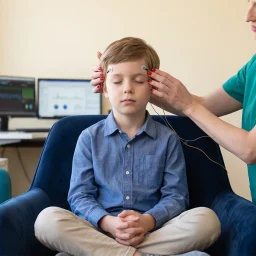
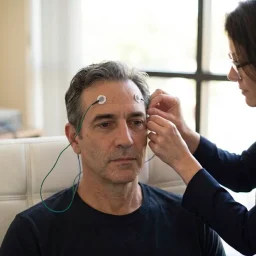
At Los Angeles Neurofeedback Center, we work with postpartum women using CLARITY Direct Neurofeedback, which is particularly well suited for new mothers for several practical reasons. Sessions are about 20 minutes long. The treatment is completely passive, so there is no homework or cognitive effort required (which matters when you barely have the bandwidth to remember where you left your phone). And it is medication-free, which removes the breastfeeding concern entirely.
CLARITY works by delivering an imperceptible micro-current signal that gently disrupts these stuck brainwave patterns and allows the brain to reorganize. For postpartum women, this often means the fog begins to lift within the first few sessions. Concentration improves. The mental sharpness starts coming back. The anxiety quiets enough that rational thinking has room to operate again. It is not an overnight transformation, but the early shifts are often noticeable enough that women feel like they are getting their minds back.
We also use HeartMath biofeedback with some postpartum clients to support autonomic nervous system regulation, which helps with the anxiety and stress reactivity that often accompany brain fog. And for clients who need flexibility around childcare and scheduling, Myndlift remote neurofeedback allows them to do some sessions from home.
You Are Not Losing Your Mind. Your Brain Is Adapting.
If you are in the middle of postpartum brain fog, the most important thing to understand is that nothing is permanently broken. Your brain is going through a massive transition, and transitions are messy. The cognitive symptoms are your brain temporarily deprioritizing certain functions while it builds new ones. For most women, the fog lifts gradually on its own. But “gradually” can mean months or years, and postpartum brain fog treatment can help, and there is no reason to simply wait it out if the symptoms are affecting your quality of life, your work, your confidence, or your ability to be present with your family.
If you want to understand what your brain is doing right now and whether neurofeedback could help accelerate the recovery, a conversation with our team can help you figure out whether treatment makes sense for your specific situation. You can book a session here.
Frequently Asked Questions
Is neurofeedback safe while breastfeeding?
Yes. Neurofeedback is completely medication-free and non-invasive. Nothing is ingested or injected. CLARITY Direct Neurofeedback uses an imperceptible electrical signal that interacts with your brain’s own activity. There is no substance that could transfer through breast milk, making it a safe option for nursing mothers who want to avoid medication.
How soon after delivery can I start neurofeedback?
There is no medical waiting period. Once you feel physically comfortable sitting in a chair for a 20-minute session, you can begin. Some clients start as early as a few weeks postpartum, while others wait until they have settled into a routine. We work around your schedule and understand that flexibility is essential with a newborn at home.
Will the brain fog go away on its own?
For most women, postpartum cognitive changes do improve over time as hormones stabilize and sleep patterns normalize. However, the timeline varies widely. Some women feel mentally sharp again within a few months. Others report persistent fog for a year or more, especially if postpartum depression or anxiety is present. Neurofeedback can accelerate this recovery by directly addressing the brainwave patterns that are driving the symptoms rather than waiting for them to resolve on their own.
Can I bring my baby to sessions?
Yes. We understand that childcare is one of the biggest barriers for new mothers seeking any kind of treatment. Babies are welcome at our Los Angeles office. Sessions are short and quiet, and many babies sleep right through them. We want to make this as accessible as possible for women who need it.