
Your child covers their ears in the grocery store. They refuse to wear certain clothes because the tags feel unbearable. A fire drill at school sends them into a meltdown that lasts the rest of the afternoon. Birthday parties, haircuts, the hum of fluorescent lights. Things that other children seem to handle without thinking can feel genuinely painful or overwhelming when a child has sensory processing disorder. Sensory processing disorder neurofeedback offers a way to address what is happening at the brain level.
If this sounds familiar, you are not imagining it. And you are not alone. Sensory processing disorder affects the way the brain receives and organizes information from the senses, and it can make daily life feel like an obstacle course for the whole family. You have probably already tried occupational therapy, sensory diets, weighted blankets, noise-canceling headphones. Some of it helps. But you may be wondering whether there is something that can address what is happening in the brain itself, not just manage the symptoms on the outside.
That is where sensory processing disorder neurofeedback comes in. And for many families, it has been the missing piece.
What Is Actually Happening in the Brain
Sensory processing disorder is not a behavioral problem. It is a neurological one. Research published through the National Institutes of Health has confirmed that children with SPD show measurable differences in brain connectivity, particularly in the pathways responsible for filtering and organizing sensory information. The brain is not broken. It is simply handling sensory input differently, often amplifying signals that should be filtered or failing to integrate information from multiple senses at the same time.
Think of it this way. Most brains have a kind of volume control for sensory input. When you walk into a noisy restaurant, your brain turns down the background chatter so you can focus on the person across the table. A child with SPD may not have that volume control working properly. Everything comes in at full blast, all the time. Or in some cases, the opposite happens. Certain signals barely register, and the child seeks out intense sensory input just to feel regulated.
This is why behavioral strategies alone often fall short. You can teach a child coping techniques, but if the brain is still sending distorted signals, the child is constantly fighting an uphill battle. Neurofeedback works at the level where the problem actually lives: the brain’s electrical patterns.
How Sensory Processing Disorder Neurofeedback Works
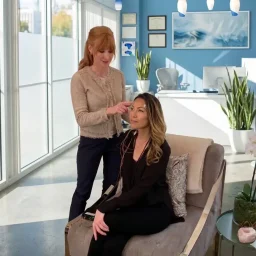
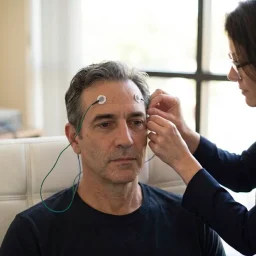
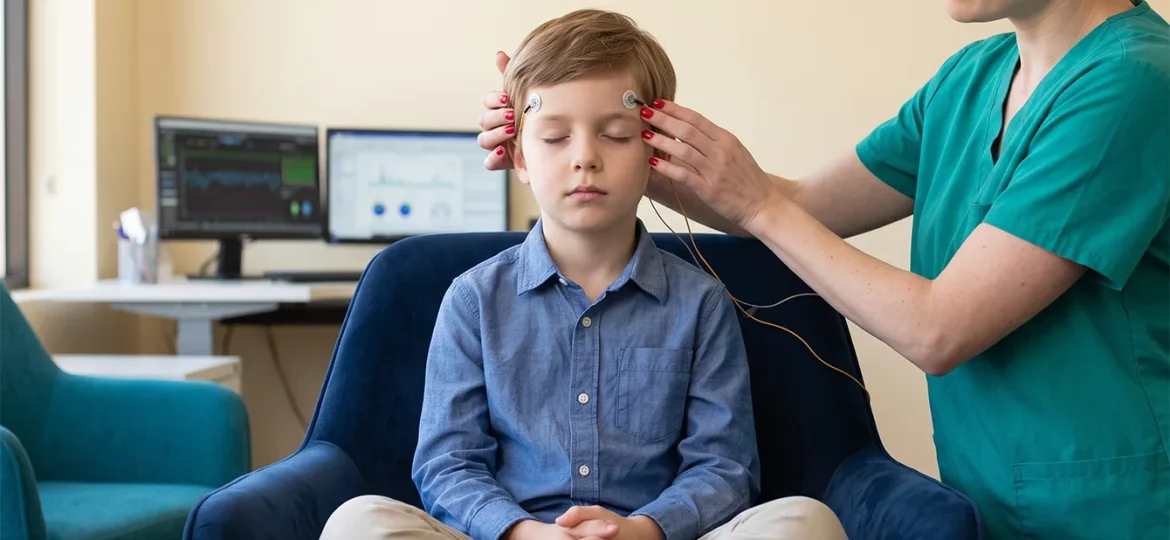
At Los Angeles Neurofeedback Center, we use CLARITY Direct Neurofeedback to deliver a micro-current signal so small that it is completely imperceptible. Your child will not feel anything during the session. There is no buzzing, no tingling, no discomfort. The signal works by gently disrupting the stuck electrical patterns that are causing the sensory dysregulation, giving the brain an opportunity to reorganize itself into a more balanced state.
This is different from traditional neurofeedback, which requires a child to sit still, pay attention to a screen, and learn to control their own brainwaves over many months. For a child who is already overwhelmed by sensory input, that kind of sustained focus can be extremely difficult. Direct neurofeedback does not require attention or effort. Most children sit quietly or even fall asleep during sessions that last about 20 minutes.
What Parents Typically Notice
The changes often start small and then build. A parent might notice that the morning routine is a little less chaotic. The child tolerates a shirt they used to refuse. A trip to the store does not end in a meltdown. Transitions between activities get smoother. Sleep improves. The child seems less on edge, less reactive, more present.
These are not surface-level behavioral changes. They reflect a genuine shift in how the brain is processing sensory information. When the brain’s filtering systems start working more efficiently, the world becomes less overwhelming. The child does not have to work so hard just to get through the day.
Many families pursue sensory processing disorder neurofeedback alongside occupational therapy and find that the combination is more effective than either approach alone. Occupational therapy teaches the child strategies for managing sensory input. Neurofeedback addresses the neurological patterns that create the overload in the first place. When the brain is better regulated, the strategies learned in OT tend to stick more easily.
Why This Matters for the Whole Family
Living with a child who has sensory processing disorder affects everyone in the household. Siblings walk on eggshells around triggers. Parents spend enormous energy anticipating and preventing meltdowns. Social invitations become sources of stress instead of joy. Family dinners, vacations, even routine errands can feel exhausting.
We see this at our center regularly, and we want you to know that what you are going through is real and it is hard. You are not being dramatic. Your child is not being difficult on purpose. And there are options beyond simply learning to cope.
Sensory processing disorder neurofeedback is not a magic fix. It requires a course of sessions, typically 15 to 20, and every child responds on their own timeline. But the changes we see in children with sensory processing difficulties are among the most rewarding outcomes in our practice. When a child can finally tolerate a classroom environment, or enjoy a birthday party, or sit through a family meal without distress, that changes the trajectory of their childhood.
Is Sensory Processing Disorder Neurofeedback Safe for Children?
Yes. The micro-current used in CLARITY Direct Neurofeedback is thousands of times weaker than what you would feel from a TENS unit or any medical device you have encountered. It is non-invasive, requires no medication, and produces no pain. The most common side effect is temporary tiredness after a session, similar to how a child might feel after a big day of learning. Published research supports the safety and efficacy of neurofeedback for pediatric populations, including children with sensory processing challenges and related conditions like ADHD and autism spectrum presentations.
If your child has been diagnosed with sensory processing disorder, or if you suspect that sensory issues are behind the struggles you are seeing at home and school, we encourage you to schedule a consultation. You can book a session or call us to start that conversation.
Frequently Asked Questions
Can neurofeedback replace occupational therapy for sensory processing disorder?
Neurofeedback and occupational therapy address different aspects of sensory processing disorder and work well together. OT teaches practical strategies for managing sensory input in daily life. Neurofeedback addresses the underlying brain patterns that create the sensory dysregulation. Many families find that when the brain is better regulated through neurofeedback, the strategies learned in OT become more effective and easier for the child to use consistently.
How young can a child start sensory processing disorder neurofeedback?
Children as young as four or five can receive CLARITY Direct Neurofeedback. Because the sessions are passive and do not require the child to concentrate or sit perfectly still, they are well suited for young children. The child simply sits in a chair for about 20 minutes. Most young clients tolerate sessions easily, and many parents report that their child looks forward to coming in.
Will my child need neurofeedback forever?
No. Neurofeedback is designed to create lasting changes in brain function, not to create dependence on ongoing treatment. A typical course is 15 to 20 sessions. Once the brain has reorganized into more efficient patterns, those changes tend to hold. Some families return for occasional tune-up sessions during periods of high stress, like the start of a new school year, but ongoing treatment is not the norm.
Is sensory processing disorder the same as autism?
No. While sensory processing difficulties are common in children on the autism spectrum, SPD is a separate condition that can exist on its own. Many children with SPD do not meet the criteria for an autism diagnosis.
Does insurance cover neurofeedback for sensory processing disorder?
Coverage varies by insurance provider and plan. Some plans cover neurofeedback under mental health or rehabilitation benefits, while others do not. We recommend contacting your insurance provider to ask about coverage for neurofeedback or biofeedback services. Our team can provide the documentation and billing codes needed for you to submit claims or check eligibility before starting treatment.