

WHAT IS HEARTMATH BIOFEEDBACK
Managing stress levels has become a hot topic in recent years, in part due to the ever-increasing pressure to keep up with hustle culture and do more and be more, and in part due to studies revealing how much stress can impact our physical health.
Many people now realize that, to succeed and be happy in life, they need to put their mental and physical health first. High-stress levels can impact digestive health, the immune system, and heart rate, and that’s not to touch on the negative effects on quality of life.
Heart rate is one of the most important markers for stress and health – specifically, your heart rate variability.
What Is Heart Rate Variability?
Heart rate variability (HRV) is a simple measure of the time variation between heartbeats. HRV is controlled by the autonomic nervous system (ANS), which is a primitive part of the nervous system (containing both the parasympathetic nervous system and the sympathetic nervous system).
Much of the stress and anxiety we feel comes from our bodies reacting to a worry (a perceived threat) as if it were a real life-or-death threat. The ANS cannot tell the difference between the threat we feel from worrying about an upcoming business meeting and that of the potential threat of a predator on the horizon, and so it will react to our feelings of fear in the same way.
While our ancestors’ stressors would largely be short-term worries (how to find food and shelter, how to get away from a predator, etc), our worries are nearly always long-term. This means we can feel in a state of high alert for days, weeks, or even months at a time, which can lead to low HRV.
What is HeartMath Biofeedback?
The HeartMath Institute has been researching the heart-brain relationship for over 25 years, and their research has shown that heart rate patterns can affect your mental state, just as much as your thoughts can affect your physicality. This feedback loop can be a difficult one to break, which is where HeartMath Biofeedback comes in.
HeartMath Biofeedback uses science-backed techniques, learning programs, and coherence technology to help users take control and learn how to intervene to prevent physical and mental stress symptoms to achieve a state of coherence.
What Is Coherence?
Coherence is when your mind, emotions, brain, and body are balanced and working in harmony, and it’s very difficult to reach through relaxation and mindfulness techniques alone. If you don’t find ways to measure and interrupt the high-stress cycle, it becomes very difficult to break free of it. That’s why HeartMath Biofeedback is so effective. HeartMath Biofeedback allows you to learn how to reach psychophysiological coherence so all systems can work effectively, giving you the benefits of emotional stability and mental clarity.
How Does Heartmath Biofeedback Work?
HeartMath Biofeedback teaches you to take control of the heart-brain connection so you can improve your physical wellbeing. HeartMath Biofeedback allows you to go beyond the conclusions you can draw when viewing your heart rate (BPM) and allows you to see the variation between beats, so you can see how your thoughts and feelings affect your heart rate on a much smaller scale. With HeartMath Biofeedback, you can learn to change your heart rhythm to create physiological coherence, to help you feel less alarm and more calm.
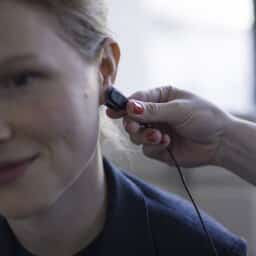
HeartMath Biofeedback is best used with the supervision of a professional who can guide you through the training but can be used daily with the HeartMath app. The HeartMath device attaches to your body to accurately measure your HRV so you can learn how to have greater control over the mind-body connection.
Most people use their HeartMath monitor while meditating and find the act of sitting down to work with their HeartMath sensor helps them relax, even before they start training with the HeartMath app.
How Effective Is Heartmath Biofeedback?
In a study of over 11,500 people, training with HeartMath Biofeedback helped participants reduce anxiety by 46%, reduce feelings of depression by 56%, and improve focus by 24%, among other benefits.
Modern life is stressful – you’ve got to manage your career, family, health, and other commitments while being bombarded with news from around the world about disasters you’ve got no control over. If you feel overwhelmed and like you don’t seem to be able to relax, you’re not alone. HeartMath technology was designed with people like you in mind and can help you drastically reduce your stress and increase your quality of life. To find out more about HeartMath schedule a consultation with one of our expert NeuroCoaches at (323) 705-3031 or schedule appt at the Los Angeles Neurofeedback Center.
Frequently Asked Questions About HeartMath Biofeedback
What is HeartMath biofeedback and how does it work?
HeartMath biofeedback is a scientifically validated system that trains you to regulate your heart rate variability, which is the natural variation in time between each heartbeat. Unlike a steady metronome beat, a healthy heart speeds up and slows down in response to breathing, emotions, and stress. HeartMath uses sensors that clip to your earlobe or fingertip to measure these patterns in real time and provides visual feedback on a screen showing when you have achieved a state of coherence. Coherence is a measurable physiological state where your heart rhythm, breathing, and nervous system are synchronized, which research has linked to improved emotional regulation, clearer thinking, and reduced stress hormones.
What is the difference between HeartMath and neurofeedback?
HeartMath and neurofeedback target different parts of the nervous system but are highly complementary. Neurofeedback works directly with brainwave patterns, training the brain to produce healthier electrical activity. HeartMath focuses on the heart-brain connection, training the autonomic nervous system through heart rate variability. Think of neurofeedback as optimizing the brain’s central processing and HeartMath as calming the body’s stress response from the bottom up. At Los Angeles Neurofeedback Center, many patients benefit from combining both approaches, using neurofeedback to address brain-based patterns like anxiety or focus issues while using HeartMath to build resilience in the body’s stress response system.
What conditions can HeartMath biofeedback help with?
HeartMath biofeedback has been extensively researched for stress management, anxiety reduction, emotional regulation, and performance enhancement. It has shown particular effectiveness for individuals dealing with chronic stress, hypertension, insomnia, panic attacks, and emotional reactivity. Athletes and executives use it to improve composure under pressure, and healthcare professionals use it to combat burnout. Because stress is a contributing factor in so many health conditions, improving heart rate variability through HeartMath training often produces benefits that extend well beyond the primary concern that brought someone to treatment.
How long does it take to see results with HeartMath?
Most people can achieve a state of coherence during their very first HeartMath session, which provides an immediate experience of calm and mental clarity. Building the ability to access that state reliably in everyday life, especially during stressful situations, typically takes several weeks of regular practice. HeartMath is designed to be a skill you develop, much like learning to meditate, so consistent practice between sessions accelerates results. At Los Angeles Neurofeedback Center, patients are given HeartMath tools they can use at home between appointments, which helps them integrate the training into their daily routine and see faster, more lasting improvements.
Can I use HeartMath at home between sessions?
One of the greatest advantages of HeartMath is its portability. HeartMath offers personal sensors and a smartphone app that allow you to practice coherence training anywhere. Your practitioner at Los Angeles Neurofeedback Center can set you up with a home practice protocol that complements your in-office sessions. Many patients find that having a home tool empowers them to manage stress in real time rather than waiting for their next appointment. The app tracks your progress over time, providing data that your practitioner can review to fine-tune your treatment plan.
Is HeartMath biofeedback safe for everyone?
HeartMath biofeedback is exceptionally safe and has no known side effects. It is completely non-invasive, involving only a small sensor on your earlobe or fingertip that reads your pulse. There are no electrical signals sent into your body and no medications involved. It is safe for children, adults, and seniors, and can be used alongside any medication or therapy without interference. The only requirement is a willingness to practice the breathing and focus techniques, which are simple enough for children as young as seven or eight to learn successfully.
Discover our HeartMath biofeedback program for stress management and emotional resilience.