
If you are considering neurofeedback, one of the most common questions is what to expect from neurofeedback in the real, day-to-day experience of going through treatment. Not the theory behind it, not the research supporting it, but the practical reality. What will you feel during the session? When will you start noticing changes? What does progress actually look like when your brain is learning to regulate itself differently?
These are fair questions, and the honest answer is that everyone responds at their own pace. But after working with hundreds of clients at the Los Angeles Neurofeedback Center, we have seen enough patterns to offer a reliable roadmap. Here is what to expect from neurofeedback over your first thirty days. Think of this guide as a trail map. The terrain may vary, but the general landmarks stay consistent.
We use CLARITY Direct Neurofeedback, which is a passive, micro-current approach that differs significantly from traditional neurofeedback. Sessions last about twenty minutes, you do not need to concentrate or perform tasks, and many people begin noticing shifts within the first one to three sessions. A full course typically runs fifteen to twenty-five sessions. Here is what that timeline tends to look like in practice.
Before Your First Session: The Intake Process
Your neurofeedback journey actually begins before you sit down for your first session. During the intake process, your neurocoach will review your history, your symptoms, your goals, and any relevant medical information.
You will also discuss practical details during intake: how often you will come in, what to expect from neurofeedback sessions, and how to track your progress between visits. Most clients begin with two to three sessions per week, which allows the brain enough repetition to build on each session while giving it time to integrate the changes between visits.
Your First Neurofeedback Session: What to Expect
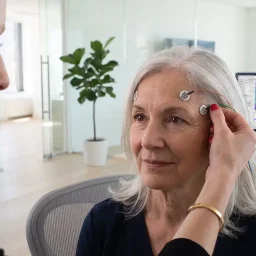
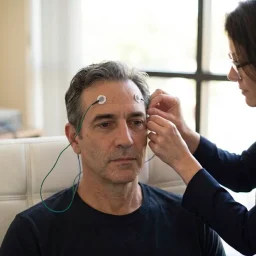
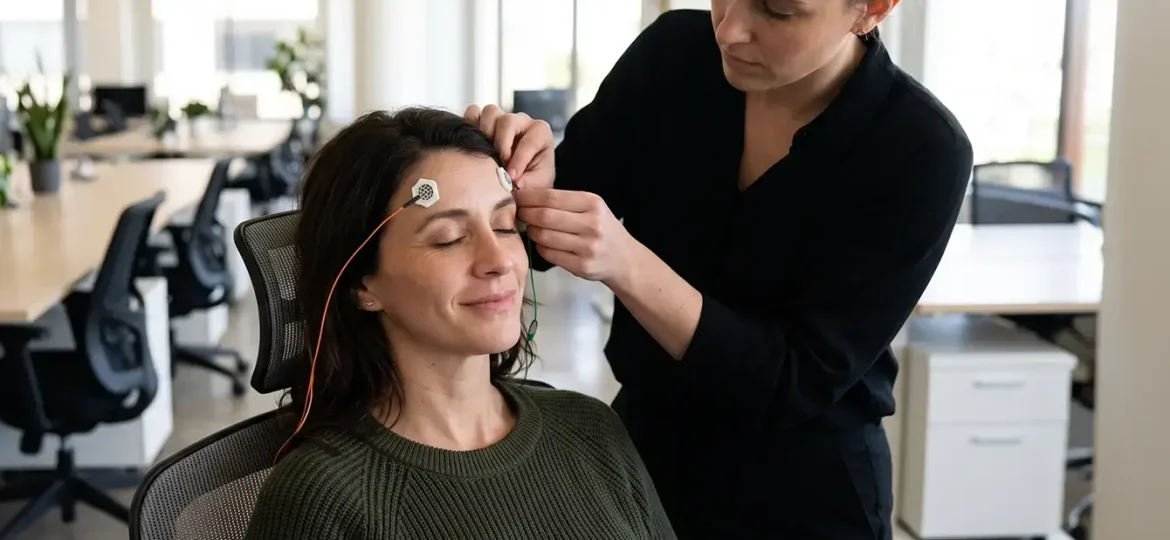
When learning what to expect from neurofeedback, many people are surprised by how unremarkable the first session feels. That is actually the point. CLARITY Direct Neurofeedback is a passive process. You do not need to watch a screen, play a game, focus on a particular thought, or do anything at all. You simply sit comfortably while small sensors are placed on your scalp. These sensors both read your brainwave activity and deliver an imperceptibly small micro-current signal back to your brain.
The word “imperceptibly” is important here. The signal used in CLARITY Direct Neurofeedback is so small that you will not feel it. There is no buzzing, no tingling, no sensation at all. Many clients tell us that if no one had told them the session had started, they would not have known. The entire session takes about twenty minutes, and most people describe it as relaxing, comparable to sitting with your eyes closed in a quiet room.
An analogy that helps explain why this works despite being so subtle: imagine your brain as a snow globe that has been shaken up. The swirling snow represents overactive or dysregulated neural patterns. CLARITY Direct Neurofeedback does not add more snow or try to grab individual flakes. It simply encourages the snow to settle. The micro-current gives your brain a gentle nudge, just enough for it to recognize its own inefficient patterns and begin self-correcting.
Days One Through Three: What to Expect from Neurofeedback Early On
What happens after you walk out of your first session varies from person to person, but understanding what to expect from neurofeedback means recognizing common patterns. Many people report feeling a sense of calm or mental clarity that they notice within hours of their first session. Some describe it as the mental equivalent of putting on a new pair of glasses: nothing around you has changed, but everything looks a little sharper.
Others feel a wave of fatigue, particularly if they came in running on stress and adrenaline. This is not a side effect in the traditional sense. It is your nervous system starting to downshift from a state of chronic overdrive. If you have been pushing through your days on cortisol and willpower, the first time your brain begins to relax, you may notice just how tired you actually are. This is usually brief, lasting a day or so, and it is generally a positive sign that your nervous system is responding to the input.
When Changes Are Less Obvious
A smaller number of people notice very little after the first session. This does not mean it is not working. Brains that have been stuck in particular patterns for a long time sometimes need a few sessions before the changes become perceptible. Think of it like turning a large ship. The rudder moves immediately, but the change in direction takes time to become visible.
During this initial period, it helps to pay attention to the small things. You may not experience a dramatic shift in your primary symptoms right away. Instead, you might notice that you fell asleep a few minutes faster, or that a conversation that usually irritates you rolled off more easily. Perhaps you had a moment of focus that surprised you. These micro-shifts are early signs that the brain is beginning to reorganize.
Week One: What to Expect from Neurofeedback Sessions Two and Three
By the end of your first week, you will typically have completed two to three sessions. This is where understanding what to expect from neurofeedback becomes easier, because momentum begins to build. Each session gives your brain another opportunity to practice self-regulation, and the effects tend to be cumulative.
The changes during week one are often subtle enough that you might miss them if you are not paying attention. Clients frequently report that they are sleeping more soundly, even if they did not come in specifically for sleep concerns. Others notice that their emotional reactions to daily stressors feel slightly less intense, as if the volume has been turned down on their stress response.
It is worth noting that changes at this stage are not always linear. You might have a great day followed by a day that feels more like your baseline. This is normal. Your brain is learning a new pattern, and learning anything new involves some oscillation between the old way and the new way. A child learning to ride a bicycle does not suddenly go from falling to perfect balance. There are wobbles in between. Your brain is doing something similar.
Your clinician may make small adjustments to your protocol based on what you report during these early sessions. This is one of the advantages of CLARITY Direct Neurofeedback: it can be fine-tuned in real time based on how you are responding.
Week Two: What to Expect from Neurofeedback Sessions Four Through Six
By week two, changes typically become more noticeable and more consistent. This is often the point where what to expect from neurofeedback becomes tangible. Clients start saying things like, “I think something is different, but I am not sure what.” They may not be able to point to a single dramatic moment, but the overall texture of their days has shifted. Sleep is usually one of the first areas to improve. If you came in with insomnia or disrupted sleep, you may find that you are falling asleep faster, staying asleep longer, or waking up feeling more rested.
Emotional reactivity is another area where week two changes tend to show up. You might notice that you are less easily triggered by things that usually set you off. Traffic that used to make you furious now just feels annoying. A work email that would have sent you spiraling only gets a shrug. It is not that you have become emotionless. It is that your brain is starting to respond to situations rather than react to them. The difference is significant: reacting is automatic and often disproportionate, while responding involves a moment of space between the stimulus and your behavior.
For those dealing with anxiety, week two is often when the baseline level of anxious arousal begins to drop. Clients describe it as the internal hum of worry getting quieter. It does not disappear overnight, but it becomes less constant, less consuming. Some people also notice improvements in focus and mental clarity during this period, finding it easier to sustain attention during work or conversations.
Weeks Three and Four: What to Expect as Neurofeedback Progress Deepens
The third and fourth weeks of neurofeedback are where many clients experience what they would describe as meaningful, noticeable change. When people ask what to expect from neurofeedback after several weeks, the answer becomes clear. The cumulative effect of seven to twelve sessions means that your brain has had enough repetition to begin establishing new patterns with some stability.
Executive function improvements often become apparent during this period. Executive function includes your ability to plan, organize, prioritize, initiate tasks, and regulate your impulses. If you have been struggling with procrastination, difficulty getting started on projects, or feeling overwhelmed by your to-do list, you may notice that these challenges start feeling more manageable. It is not that the tasks have gotten easier. It is that your brain is better equipped to approach them.
Emotional regulation deepens during weeks three and four as well. Where week two might have brought a reduction in reactivity, weeks three and four often bring a more stable sense of emotional equilibrium. Clients who came in for depression sometimes report that they are experiencing more moments of genuine interest or motivation, not euphoria, but a return of the normal engagement with life that depression had dulled.
Cognitive clarity is another common improvement in this phase. People describe their thinking as “cleaner” or “less cluttered.” Decision-making feels less effortful. The mental fog that many people live with, often without realizing it until it lifts, begins to clear.
This is also the stage where the people around you may start noticing changes, sometimes before you do. Partners, family members, and close friends often comment on shifts in your mood, patience, or energy levels. Because the changes happen gradually from your perspective, you may not recognize how far you have come until someone else points it out.
What “Done” Looks Like: The Full Neurofeedback Course and Beyond
A complete course of CLARITY Direct Neurofeedback typically involves fifteen to twenty-five sessions. Knowing what to expect from neurofeedback also means understanding the full timeline. The exact number depends on the complexity of what you are addressing, how your brain responds, and what your goals are. Some people feel that they have achieved their objectives by session fifteen. Others benefit from continuing through session twenty-five for deeper or more lasting changes.
“Done” does not mean perfect. It means that the dysregulated patterns that were causing your symptoms have shifted enough that you are functioning significantly better in your daily life. Sleep becomes more consistent. Emotional responses feel more proportionate. Your ability to focus, plan, and follow through has improved. The background noise of anxiety, mental fog, or low mood has quieted to a level that no longer interferes with your quality of life.
Many clients choose occasional maintenance sessions after completing their initial course. Think of it like returning to the gym periodically, even after reaching your fitness goals. Maintenance sessions, typically once every 4-6 months can help your brain sustain its improvements, particularly during periods of high stress or major life transitions.
We also offer complementary approaches that can support the gains you make through neurofeedback. HeartMath biofeedback teaches you techniques for regulating your heart rate variability, which has a direct effect on your autonomic nervous system and emotional state. For those who want to continue neurofeedback training at home between sessions or after their course is complete, Myndlift remote neurofeedback offers a way to do supervised neurofeedback from your own living room.
Why Some People Respond Faster Than Others
If you are reading this alongside a friend who is also doing neurofeedback, do not be surprised if what to expect from neurofeedback looks different for each of you. Several factors influence how quickly your brain responds to treatment.
Severity and complexity play a role. A person dealing with mild, recent-onset anxiety will generally respond faster than someone managing a combination of chronic anxiety, depression, and trauma that stretches back years. This is not a reflection of effort or willingness. It is simply that brains with more deeply entrenched patterns need more repetitions to establish new ones.
Neuroplasticity varies from person to person. This is your brain’s ability to form new neural connections and reorganize existing ones. Research published in Frontiers in Human Neuroscience has shown that neuroplasticity remains active throughout life. Younger brains tend to be more plastic, but neuroplasticity is present at every age. Lifestyle factors like sleep quality, exercise, nutrition, and substance use also influence how readily your brain adapts to new patterns.
Your overall health and the medications you are taking can also affect the pace of change. Some medications work synergistically with neurofeedback, while others may slow the process. Your neurocoach will take all of these factors into account when setting expectations and adjusting your protocol.
The most important thing is to focus on your own trajectory rather than comparing yourself to others. If you are making progress, even if it is slower than you hoped, the process is working. Consistency matters more than speed.
Getting Started with Neurofeedback
Now that you know what to expect from neurofeedback, you may be ready to begin. The Los Angeles Neurofeedback Center is open seven days a week, with appointments available as early as 7 AM on weekdays. You can book a session online or call us at 323-705-3031 to schedule your intake. We are happy to answer any questions before you come in.
Frequently Asked Questions About Neurofeedback
How long does each neurofeedback session take?
Each CLARITY Direct Neurofeedback session takes approximately twenty minutes. Unlike traditional neurofeedback, which can require forty-five minutes to an hour, CLARITY sessions are significantly shorter because the technology works passively. Most clients are in and out within thirty minutes when you include sensor setup and a brief check-in with your clinician.
Will I feel anything during the session?
No. The micro-current used in CLARITY Direct Neurofeedback is far too small to produce any physical sensation. You will not feel buzzing, tingling, warmth, or anything at all from the treatment itself. Most people simply sit comfortably with their eyes closed and find the experience relaxing. The effects are noticed after the session, not during it.
How many sessions will I need?
A typical course of CLARITY Direct Neurofeedback runs fifteen to twenty-five sessions, with most people coming in two to three times per week. The exact number depends on your specific concerns, how complex your situation is, and how your brain responds. Your clinician will give you a more personalized estimate after your intake and first few sessions, but many clients begin noticing meaningful changes within the first week or two.
Can I do neurofeedback while taking medication?
Yes. Neurofeedback is compatible with most medications, and many clients begin neurofeedback while continuing their current prescriptions. As your brain begins to regulate more efficiently, you may find, in consultation with your prescribing physician, that your medication needs shift over time. Your neurofeedback clinician and your prescribing doctor can work together to ensure a coordinated approach. Never adjust your medication on your own without medical guidance.
What if I do not notice any changes in the first few sessions?
This is not uncommon, and it does not mean the treatment is not working. Some brains need more repetitions before changes become noticeable, particularly if the patterns being addressed are long-standing or complex. Many people who notice very little after one or two sessions begin reporting changes by sessions four to six. It also helps to track subtle shifts in sleep, mood, focus, and stress reactivity, as these smaller changes often precede the larger improvements and can be easy to overlook if you are waiting for a dramatic moment.