
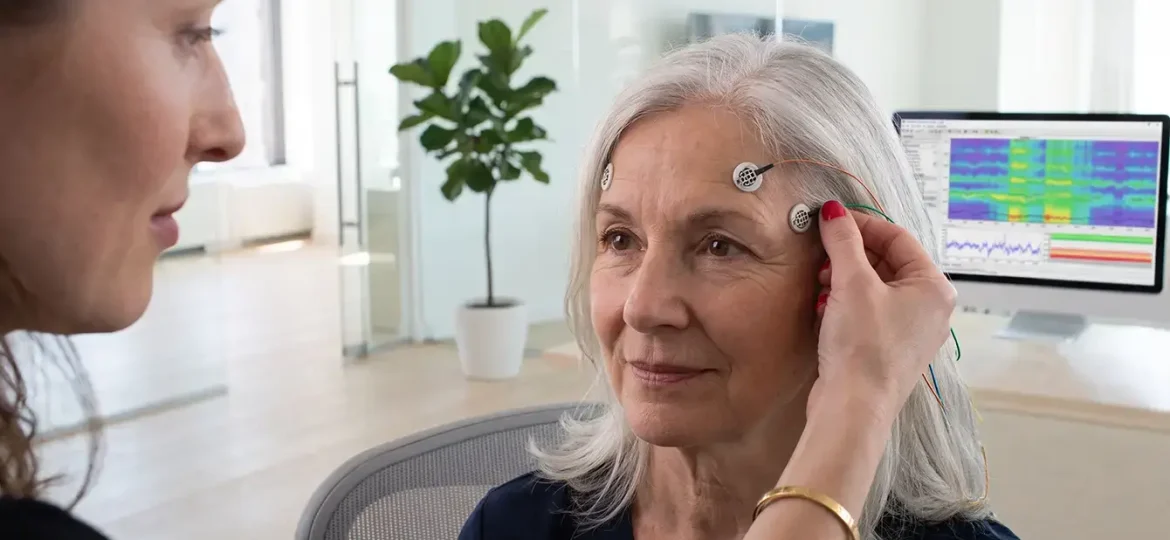
It starts small. You walk into a room and cannot remember why. A name you have known for years sits just out of reach. You lose your train of thought mid-sentence more often than you used to. You read something interesting and by the next day you have only a vague sense that you read it at all. Each moment is minor on its own. But together they form a pattern that is hard to ignore, and harder not to worry about. Neurofeedback for memory loss is designed to address exactly this pattern.
If you are in your fifties, sixties, or beyond and noticing these changes, you are almost certainly wondering the same thing everyone wonders: is this normal aging, or is this the beginning of something worse? That question carries real weight, and you deserve a thoughtful answer rather than a dismissive one.
The truth is that some degree of cognitive change is a normal part of aging. Processing speed slows. Working memory capacity decreases slightly. These are expected shifts. But they do not have to define the next decades of your life, and there is a meaningful difference between a brain that is aging normally and a brain that is aging well. Neurofeedback for memory loss helps the brain stay on the right side of that line.
What Happens to the Brain as We Age
The aging brain undergoes measurable changes in its electrical activity. Research published through the National Institutes of Health has documented that older adults show shifts in brainwave patterns, often including a reduction in the faster frequencies associated with focus and attention, and an increase in slower frequencies associated with mental fogginess. Connectivity between brain regions also tends to decrease, which means the brain’s different areas communicate less efficiently with each other.
These electrical changes are not diseases. They are the brain equivalent of a car engine that has been running for many miles. Everything still works, but the timing is slightly off, the idle is a little rough, and the response is not as quick as it once was. The question is whether you accept the decline as inevitable or whether you invest in keeping the engine tuned.
What makes cognitive aging worse than it needs to be is when these natural changes combine with other factors: poor sleep, chronic stress, depression, isolation, or medications that affect cognitive function. Many older adults are dealing with several of these at once, and the cumulative effect on mental clarity can be significant. A brain that might age gracefully under ideal conditions can deteriorate faster when it is fighting on multiple fronts.
How Neurofeedback for Memory Loss Supports the Aging Brain
At Los Angeles Neurofeedback Center, we start with cognitive testing that measures your actual performance in areas like memory, attention, processing speed, and executive function.
This baseline matters because it tells us exactly where your brain needs support, and it gives us a way to measure progress objectively. You will not have to wonder whether the treatment is working. We can show you the data.
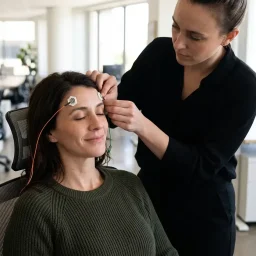
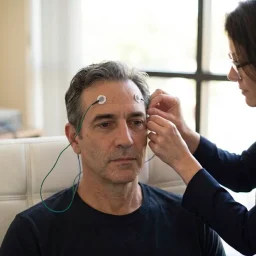
CLARITY Direct Neurofeedback delivers a micro-current signal that is entirely imperceptible. There is no sensation, no discomfort, and no effort required. The signal gently disrupts the sluggish or disorganized electrical patterns that are contributing to cognitive decline, giving the brain an opportunity to reset toward more efficient function. Sessions last about 20 minutes, and most clients find them relaxing and easy.
Published research on neurofeedback for memory loss in older adults has shown measurable improvements in attention, working memory, and processing speed. These are the exact domains that age-related cognitive changes tend to affect most. The brain retains its capacity for neuroplasticity throughout life. It can still form new connections, strengthen existing ones, and reorganize its patterns. It just sometimes needs a nudge to do so, and neurofeedback provides that nudge.
What Neurofeedback for Memory Loss Looks Like Day to Day
The improvements tend to show up in everyday moments. A client mentions that they followed an entire conversation at dinner without losing the thread. Someone who had stopped reading books because they could not retain the content finds themselves finishing a novel for the first time in years. A name comes to mind immediately instead of arriving two hours later. The mental energy that used to be depleted by noon lasts further into the afternoon.
Sleep improvements are common and meaningful. Many older adults have fragmented sleep that leaves them unrested, and poor sleep directly impairs memory consolidation and cognitive function. When neurofeedback helps normalize sleep patterns, the cognitive benefits compound. A well-rested brain simply works better, at any age.
For clients who are also dealing with anxiety or depression, which are both common in older adults and both damaging to cognitive function, neurofeedback often improves mood and reduces worry alongside the cognitive gains. This makes sense because the brain patterns that drive anxiety and depression overlap with the patterns that impair memory and focus. Treating the brain as a whole system produces broader improvements than targeting any single symptom.
A typical course of neurofeedback for memory loss is 15 to 20 sessions. Some clients choose to continue with periodic maintenance sessions, similar to how you might continue going to the gym to maintain physical fitness. The brain responds to ongoing support the same way the body does.
Why Neurofeedback for Memory Loss Is Worth the Investment
You invest in your physical health. You see doctors, manage your diet, and stay as active as you can. Your brain deserves the same attention. Cognitive decline is not something that simply happens to you. It is a process that can be slowed, managed, and in many cases partially reversed with the right support.
At Los Angeles Neurofeedback Center, we work with many clients who come in worried that their best years of thinking are behind them. What they find is that the brain is more resilient and more capable of change than they expected. Neurofeedback is not a magic bullet, and we will always be honest with you about what it can and cannot do. But for most people experiencing age-related cognitive changes, it offers a real path to better function that does not involve medication, cognitive drills, or false promises.
If you or someone you love is noticing cognitive changes and wants to do something about them, we invite you to schedule a consultation. You can book a session or call us directly. The sooner you start, the more you have to work with.
Frequently Asked Questions
Can neurofeedback prevent dementia?
Neurofeedback is not a dementia prevention treatment, and we would not make that claim. What it can do is optimize the brain’s current function and support the electrical patterns associated with healthy cognition. By improving sleep, reducing stress-related brain patterns, and enhancing connectivity between brain regions, neurofeedback helps create conditions that support long-term brain health. If you have concerns about dementia specifically, we recommend discussing them with a neurologist alongside any neurofeedback treatment.
Is there an age limit for neurofeedback?
No. We have worked with clients well into their eighties. The brain retains its capacity for neuroplasticity throughout life, which means it can still respond to neurofeedback at any age. Older brains may respond somewhat more gradually than younger ones, but the potential for meaningful improvement remains.
How is this different from brain training apps?
Brain training apps work by engaging you in cognitive exercises that practice specific skills like memory and attention. Neurofeedback works at the electrical level, addressing the underlying brain patterns that determine how well those skills function. Research on brain training apps has shown limited transfer to real-world cognitive performance. Neurofeedback changes the brain’s baseline function, which improves cognitive performance across the board rather than in one trained task.
Will I need to keep doing neurofeedback indefinitely?
Not necessarily. A standard course of 15 to 25 sessions produces lasting changes in brain function. Some clients choose to return for periodic maintenance sessions, perhaps once a month or every few months, to keep their brain performing optimally. This is optional and depends on your individual response and goals. Think of it like physical fitness: the initial training produces results, and occasional maintenance helps sustain them.
Can neurofeedback help if I am already on cognitive medication?
Yes. Neurofeedback does not interact with medications commonly prescribed for cognitive concerns, including cholinesterase inhibitors or memantine. It works at the brain’s electrical level, which is a different mechanism than pharmaceutical approaches. Many clients do both. We always recommend maintaining care with your prescribing physician and are happy to coordinate with your medical team.