
NEUROFEEDBACK FOR ADHD
Did you know an estimated 8.4% of children and 2.5% of adults have ADHD. It is one of the most common neurodevelopmental conditions of childhood. And many adults with ADHD do not realize they have the disorder. It is likely you, a loved one or someone you know is affected with ADHD. So, you may wonder, is neurofeedback for ADHD an option?
What is Attention Deficit Hyperactivity Disorder (ADHD)?
Symptoms of ADHD include inattention (not being able to keep focus), hyperactivity (excess movement that is not fitting to the setting) and impulsivity (hasty acts that occur in the moment without thought). Many ADHD symptoms, such as high activity levels, difficulty remaining still for long periods of time and limited attention spans, are common to young children in general. But, the difference in children with ADHD is that their hyperactivity and inattention are greater than expected for their age and cause distress and/or problems functioning at home, at school or with friends.
Neurofeedback for ADHD in Adults
For adults with ADHD it may be challenging to focus, leading to missed deadlines and forgotten meetings or social plans. In addition, the inability to control impulses can range from impatience waiting in line or driving in traffic to mood swings and outbursts of anger.
Adult ADHD symptoms may include:
- Impulsiveness
- Disorganization and problems prioritizing
- Poor time management skills
- Problems focusing on a task
- Trouble multitasking
- Excessive activity or restlessness
- Poor planning
- Low frustration tolerance
- Frequent mood swings
- Problems following through and completing tasks
- Hot temper
- Trouble coping with stress
Left untreated, adults with ADHD can experience reduced emotional and social functioning in areas such as:
- Morning routine (getting ready for work and/or kids ready for school)
- Driving safely to office
- Finishing work accurately and on time
- Helping kids with homework
- Interacting with significant other/partner
- Planning next day’s activities
- Going to bed on time
Traditional Treatments vs. Neurofeedback Treatment
Treatment of ADHD usually consists of medication therapy, often combined with behavioral therapy. These treatments can also include parent and teacher management training and mediation.
Over the past years, the Multimodal Treatment Study of Children with ADHD has provided ample ADHD research about stimulant medication and behavioral treatments. The studies prove that both stimulant medication and combined treatment had clinical benefit in the short term. Long-term, the benefits decreased after 24 months, as well as after 6 and 8 years. These findings have resulted in a growing interest into the development of non-drug treatments in ADHD such as Neurofeedback for ADHD.
Neurofeedback Treatment for ADHD
Frequently Asked Questions About Neurofeedback for ADHD
Does neurofeedback really work for ADHD?
Neurofeedback has been studied extensively for ADHD and is supported by a growing body of research. The American Academy of Pediatrics has recognized neurofeedback as a Level 1 evidence-based intervention for ADHD, placing it on par with medication in terms of research support. Neurofeedback works for ADHD because the condition is fundamentally a brain regulation issue. People with ADHD typically produce excess theta waves, associated with daydreaming and inattention, and insufficient beta waves, associated with focused concentration. Neurofeedback trains the brain to correct this imbalance, producing lasting improvements in attention, impulse control, and executive function without the side effects that come with medication.
Is neurofeedback a replacement for ADHD medication?
Neurofeedback can be used as a standalone treatment or alongside medication, depending on the individual’s needs and preferences. Some patients use neurofeedback as an alternative to medication, particularly parents who prefer not to medicate their children or adults who experience unwanted side effects from stimulant medications. Others use neurofeedback as a complement to medication, often finding that they can reduce their dosage over time as the brain learns to regulate itself more effectively. Any medication changes should always be discussed with the prescribing physician. At Los Angeles Neurofeedback Center, treatment plans are individualized based on qEEG brain mapping results and each patient’s goals.
How many neurofeedback sessions are needed for ADHD?
Most ADHD patients begin noticing improvements in focus and attention within the first ten to fifteen sessions. A comprehensive course of treatment typically involves twenty to forty sessions, with the exact number depending on the severity of symptoms, how long the condition has been present, and the individual’s neuroplasticity. Children often respond faster than adults because their brains are still developing and are naturally more adaptable. With CLARITY Direct Neurofeedback at Los Angeles Neurofeedback Center, results often appear more quickly than with traditional neurofeedback because the approach works passively and directly rather than relying on the patient to consciously alter their brain activity.
Can neurofeedback help adults with ADHD?
Neurofeedback is effective for ADHD across all age groups, including adults who were diagnosed later in life or who have been managing the condition for decades. Adult ADHD often presents differently than childhood ADHD, with symptoms like difficulty with organization, time management, emotional regulation, and sustained attention in professional settings. Neurofeedback addresses the underlying brain patterns regardless of age, and many adult patients at Los Angeles Neurofeedback Center report significant improvements in work performance, relationship quality, and overall quality of life after completing a course of treatment.
What are the long-term results of neurofeedback for ADHD?
One of the most compelling advantages of neurofeedback over medication for ADHD is that the benefits tend to persist long after treatment ends. This is because neurofeedback produces actual structural and functional changes in the brain through neuroplasticity rather than simply masking symptoms while a drug is active. Follow-up studies have shown that improvements in attention and behavior are maintained years after completing neurofeedback training. This contrasts with medication, which only works while it is being taken and whose effects disappear as soon as the dose wears off.
How does CLARITY Direct Neurofeedback differ from traditional neurofeedback for ADHD?
Traditional neurofeedback for ADHD typically requires the patient to play a video game or watch a movie controlled by their brainwaves, which demands sustained attention and concentration, the very skills that ADHD makes difficult. This creates a frustrating paradox for many patients, especially children. CLARITY Direct Neurofeedback eliminates this problem entirely because it works passively. The patient simply sits comfortably while the system delivers an imperceptibly small signal that helps the brain shift out of its stuck patterns. This makes CLARITY particularly well-suited for ADHD patients who would struggle with the demands of traditional neurofeedback protocols.
What to Expect During Your ADHD Neurofeedback Sessions
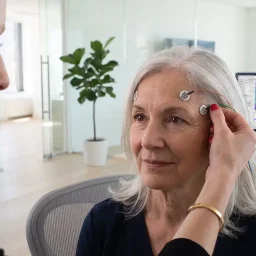
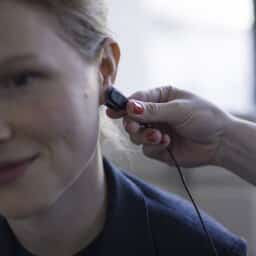
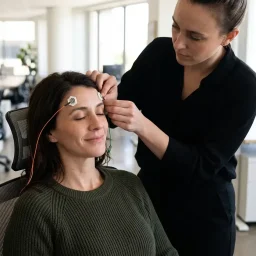
Your first visit to Los Angeles Neurofeedback Center begins with a thorough intake consultation where we discuss your ADHD symptoms, history, goals, and any previous treatments. We then conduct a qEEG brain map, which takes approximately 30 minutes and involves wearing a comfortable cap with sensors that record your brainwave activity. This painless, non-invasive assessment creates a detailed picture of how your brain functions.
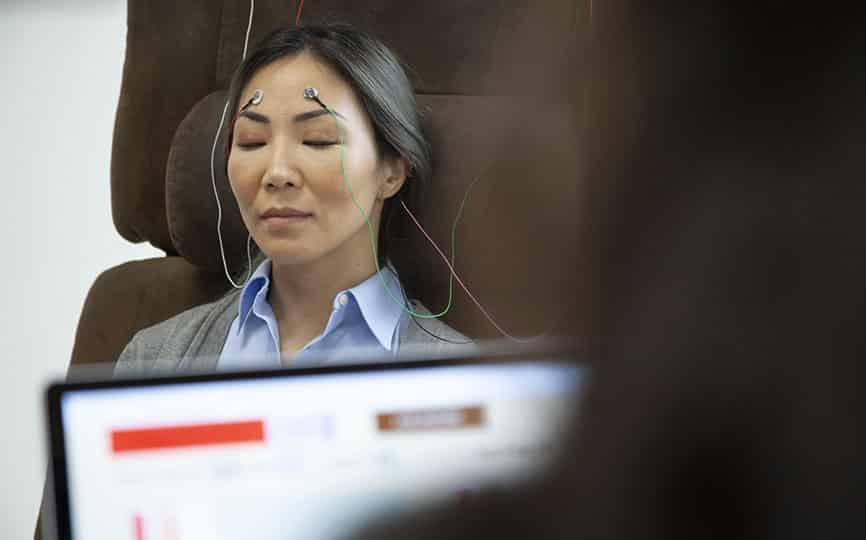
Based on your qEEG results, we design a customized CLARITY Direct Neurofeedback protocol targeting the specific brainwave patterns contributing to your ADHD symptoms. During treatment sessions, which typically last 20 to 30 minutes, you simply sit comfortably while the system delivers imperceptibly small electrical signals that help your brain reorganize its activity patterns. Unlike traditional neurofeedback, there is no need to concentrate on a screen or play a game, making it particularly effective for patients who struggle with sustained attention.
Most ADHD patients at our Los Angeles center notice initial improvements in focus, mental clarity, and emotional regulation within the first five to ten sessions. A full treatment course typically involves 20 to 40 sessions, scheduled one to three times per week depending on your availability and the severity of your symptoms. Many patients describe the experience as deeply relaxing, and it is common to feel a sense of increased calm and mental sharpness immediately after each session.
Research Supporting Neurofeedback for ADHD
The scientific evidence for neurofeedback as an ADHD treatment has grown substantially over the past two decades. A landmark meta-analysis published in the Journal of Clinical EEG and Neuroscience found that neurofeedback produced significant improvements in inattention and impulsivity, with effect sizes comparable to those seen with stimulant medication. Importantly, these improvements were maintained at follow-up assessments conducted six to twelve months after treatment ended.
The American Academy of Pediatrics has evaluated the evidence for neurofeedback and assigned it a Level 1 rating, which is their highest level of evidence-based support. This places neurofeedback in the same category as medication for ADHD treatment. Research using functional MRI has demonstrated that neurofeedback produces measurable changes in brain connectivity patterns, particularly in the prefrontal cortex and anterior cingulate cortex, regions that are consistently underactive in ADHD.
A 2019 randomized controlled trial published in European Child and Adolescent Psychiatry found that children who received neurofeedback showed continued improvement in ADHD symptoms even two years after completing treatment, while those on medication only showed benefits while actively taking the drug. This durability of results is one of the most compelling arguments for neurofeedback as a long-term ADHD management strategy.
ADHD Treatment at Los Angeles Neurofeedback Center in Brentwood
Located in the Brentwood neighborhood of West Los Angeles, the Los Angeles Neurofeedback Center provides specialized ADHD neurofeedback treatment for patients throughout the greater Los Angeles area. Our Brentwood office is conveniently accessible from Santa Monica, Pacific Palisades, Beverly Hills, Westwood, and the entire Westside of Los Angeles, with easy access from the 405 and 10 freeways.
Our approach to ADHD begins with a comprehensive qEEG brain map that identifies the specific patterns of dysregulation unique to each patient. This personalized assessment allows our team, led by founder Meg Stuppy, to create a targeted neurofeedback protocol rather than a one-size-fits-all approach. We use CLARITY Direct Neurofeedback technology, which works passively and typically produces noticeable results faster than traditional neurofeedback methods.
We treat ADHD in children as young as five, teenagers navigating the academic demands of Los Angeles schools, college students at UCLA, USC, and other local universities, and adults managing the cognitive demands of careers in entertainment, technology, law, and business throughout Los Angeles County. Our office also offers remote neurofeedback sessions for patients who prefer the convenience of treatment from home.
Other Conditions We Treat with Neurofeedback in Los Angeles
Explore our full range of neurofeedback therapy services at Los Angeles Neurofeedback Center
Anxiety Treatment in Los Angeles
Non-invasive brain training that calms the overactive stress response.
Learn More →Depression Treatment in Los Angeles
Drug-free neurofeedback therapy to help regulate mood and restore emotional balance.
Learn More →PTSD Treatment in Los Angeles
Neurofeedback helps calm trauma-related brain patterns without re-living the experience.
Learn More →Autism Support in Los Angeles
Brain training to improve sensory processing, communication, and self-regulation.
Learn More →Peak Performance in Los Angeles
Brain optimization for athletes, executives, and students seeking a mental edge.
Learn More →← Back to Los Angeles Neurofeedback Center Home | Meet Our Team →
Learn more about our comprehensive neurofeedback approach to treating ADD/ADHD in children and adults.